A Role for Finger Properties in Exploration and Perception of Softnesshttps://www.uni-giessen.de/de/fbz/fb06/psychologie/abt/allgemeine-psychologie/arbeitsgruppen/haptics/publications/2025/2025-8https://www.uni-giessen.de/@@site-logo/logo.png
Inhaltspezifische Aktionen
A Role for Finger Properties in Exploration and Perception of Softness
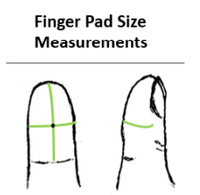
Individuals with more elastic, more hydrated or smaller fingers usually show better performance in several passive touch tasks. In active touch, people use different exploratory procedures when evaluating object properties, and tune their exploratory parameters. For example, they indent stimuli to assess softness and optimize their peak forces to get relevant information. In this study, we aim to understand whether finger pad size, elasticity and hydration affect individuals' force-tuning and discrimination performance in active softness perception. Participants performed two softness tasks in two different sessions. In one session, hyaluronic acid was applied to their finger pads to soften it, in the other they received no treatment. We assessed individual elasticity and hydration values with cutometer and corneometer in each session, and measured finger pad size in three dimension by caliper. In each task, two pairs of stimuli were presented to the participants (Young's Modulus: 41.5 vs. 45.0; 28.7 vs. 31.3 kPa) who chose the softer stimulus. In the restricted task, they could apply force only up to 2 Newton, whereas there was no force limit in the unconstrained task. We found that participants with smaller finger pad size exerted less force in the restricted task and participants with more hydrated and elastic fingers exerted less force in the unconstrained task. The force-tuning disappeared in the unconstrained task when treatment was applied. These results indicate that people employ strategies according to their finger parameters and to the availability of cues whereas adaptation to treatment is likely to need longer practice. Katircilar, D., Bennewitz, R., & Drewing, K. A Role for Finger Properties in Exploration and Perception of Softness. IEEE transactions on haptics. https://doi.org/10.1109/TOH.2025.3582077