Workshop Futuring the University?
This workshop explores the present and future of higher education. The sector faces a crisis of purpose amidst multiple challenges, leading to questions about its role and mandate going forward. The workshop aims to transcend disciplinary boundaries, fostering dialogue among diverse stakeholders to address these issues. By embracing a multidisciplinary approach and promoting collaboration, we seek to ignite discussions that may lead to institutional and individual engagement and innovation, countering crisis fatigue and fostering collective reflection.
- Programme
-
INTERNATIONAL WORKSHOP
Futuring the University: Translating and Transforming Value(s) and Valuation(s) of Higher Education
International Graduate Centre for the Study of Culture (GCSC)
Giessen Graduate Centre for Social Sciences, Business, Economics and Law (GGS)
Justus Liebig University Giessen
July 18–19, 2024

- CfA Futuring the University? (PDF)
- Programme - Futuring the University? (PDF)
- Keynote Lectures
-
Keynote Lectures (Information and Online Access Links)
Keynote Michael Tomlinson: "Re-imagining the economic purpose of higher education"
Keynote "Re-imagining the economic purpose of higher education - towards changing conceptions of human capital, value and meaning in working life"
Prof. Michael Tomlinson (University of Southampton)
This talk explores how the value of Higher Education might be (re)articulated during times of recent economic and social change. At important societal junctures, the value of HE is brought into question, including its social and economic role. Much of the discourse is heavily informed by notions of performative value, often to the tune of neoliberal logics and imperatives. This is premised on a reified notion of value, constricting HE’s role to the satisficing increase in marginal productivity and meeting other technicist demands, whilst students are depicted as rational investors, consumers, and idealised future neoliberal subjects. These principles are equally pertinent to how academics are positioned in marketized and competitive institutional fields. A different way of conceptualising both graduate and academic work is to use alternative framings of human capital and meaningful work that brings into play the agency and identity of future workers, including their role in the public sphere. This further entails a fundamental retooling in our understanding of higher education’s role in meeting economic goals and the labour market’s capacity for enabling the realisation of graduates’ potential for meaningful labour. This raises wider policy and practical implications for how universities and labour markets may better interact, and educators and students think about their future working lives.
Michael Tomlinson is Professor at the Southampton Education School (University of Southampton) and Co-Director of the Leadership, Effective Education and Policy (LEEP) research centre. His research draws principally on sociological approaches to the education/work nexus and has substantive interests in higher education policy, labour markets, employability and marketisation. An ongoing theme in his research is the construction of identities and how policy and social changes impact on institutions and stakeholders. His work combines critical conceptual analysis with an interest in developing practical tools and resources that can aid future career progression. He has applied theories of capitals, credentialism, value and identity to address these issues.
Keynote Brian Ballsun-Stanton: "Briefing on the Guidance Note on Generative AI in Research at Macquarie University"Keynote "Briefing on the Guidance Note on Generative AI in Research at Macquarie University - The Pragmatics of Use and Abuse of Frontier Generative AI Models like Claude 3 Opus and GPT-4 Turbo"
Dr. Brian Ballsun-Stanton (Macquarie University)
Macquarie has published a Guidance Note for Using Generative AI in Research. In this keynote, Dr Brian Ballsun-Stanton will explain the policy advice this note provides, and discuss the benefits and risks of this evolving technology. In summary: we may use it as part of our research and writing workflows - so long as we are mindful of the risks of using it as a tool. Do not treat this tool like a search engine -- but instead as a "calculator for words." For background on this technology, you can watch a recording of Brian’s hands-on introduction on Youtube.
The keynote will address pre-submitted audience questions. Please send your questions to Lena (lena.nuechter@gcsc.uni-giessen.de) until 11 July.
Dr. Brian Ballsun-Stanton is the Macquarie University Faculty of Arts' Solutions Architect (Digital Humanities). He is a technologist working as a peer with researchers across the faculty and university on digitally enabled research. With a BS and MS in Information Technology and a PhD in the Philosophy of Data, he is guiding the faculty and university in this crazy new world of "Generative AI." He has given workshops across Europe and Australia about how to think about and use Generative AI tools. He is collaborating with researchers in Philosophy, Law, Security Studies, Languages, and Ancient History around how to use and apply Large Language Models to research problems and undergraduate teaching, and designs and delivers technical solutions for academic and student research projects.


- Information for Participants
-
There is no workshop fee. Travel and accommodation costs are covered by participants. Should you need a formal letter of acceptance to apply for travel funding, please contact lena.nuechter.
- Contact
- Schedule
-
-
15 February 2024 - abstract submission
-
15 March 2024 - notification of acceptance
-
29 May 2024 - final workshop programme
-
23 June 2024 - paper submission deadline
-
18-19 July 2024 - workshop dates
-
- Where to Find Us
-
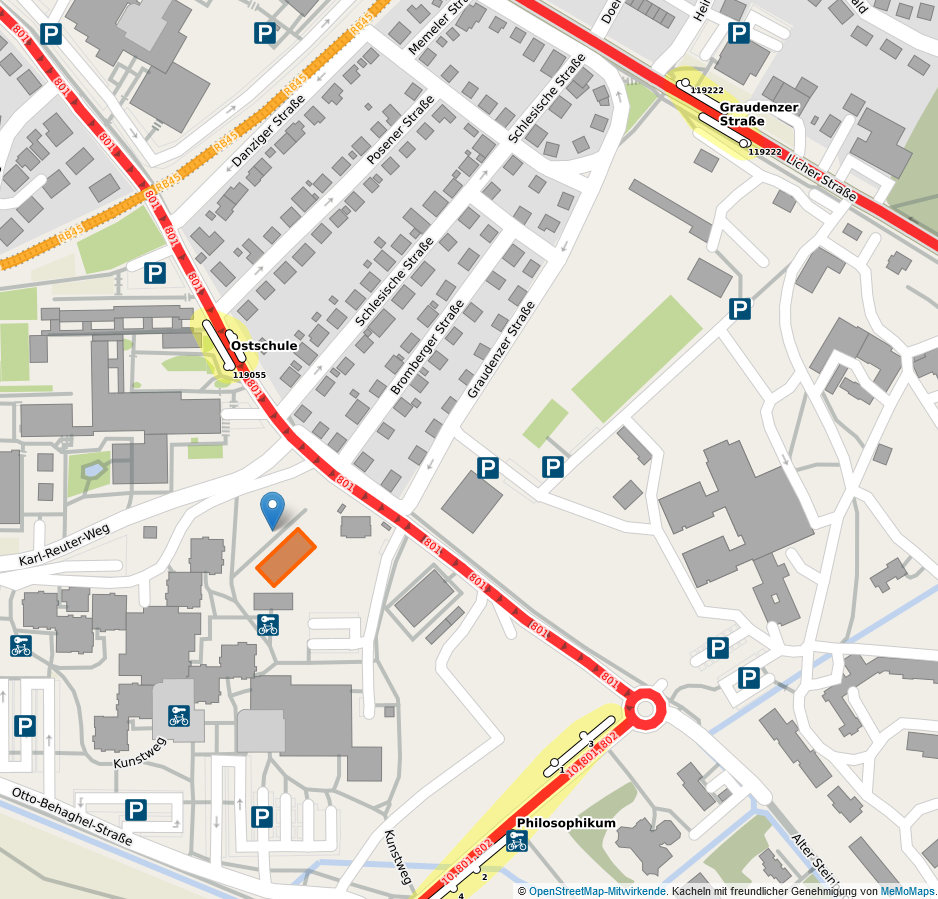
Where to find us
Address Justus-Liebig-Universität Gießen
Giessener Graduiertenzentrum Kulturwissenschaften (GGK)
International Graduate Centre for the Study of Culture (GCSC)Otto-Behaghel-Str. 12
35394 GiessenReaching Giessen by train or plane (Frankfurt Airport)
Giessen Station can be reached by intercity or regional trains from all directions (see Deutsche Bahn or Trainline for connections). If you're coming by plane, you can take the train from Frankfurt airport train station (Frankfurt(M)Flughafen) to the main train station (Frankfurt(Main)Hbf) in Frankfurt. From there, take a regional train to Giessen (see the Deutsche Bahn website).
From Giessen train station, you can take a bus or a nextbike to the GGK/GCSC.
From the train station Gießen Oswaldsgarten and the bus stop Gießen Marktplatz, the bus line 801 goes to the bus stop Ostschule. When you arrive at Gießen Ostschule, you will see the four-storey GGK/GCSC building. From the main train station Gießen Bahnhof, you reach the stop Gießen Marktplatz with the bus lines 2, 5, 15, 24.
Alternative: Line 10 und 18 (from the main Gießen train station) and line 802 (Gießen Oswaldsgarten and Marktplatz) to the stop Giessen Philosophikum. The walk from there is about 10 minutes.
You will find the current route planner on the Stadtwerke Gießen website.
Alternatively, pick up a nextbike at the main station (or at any station close to your hotel) and cycle to the GCSC. You can drop the bike off at a station directly behind our building.