
Lecturers 2024
|
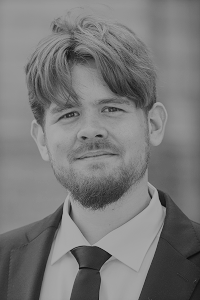
Barry de Vries is a Research Associate at the Chair of Public Law and International Law at the Justus Liebig University Giessen and Associate Fellow at PRIF's research department International Institutions. He is specialized in International Law, especially International Criminal Law, International Humanitarian Law, Arms Control Law and Human Rights Law. |

Prof. Dr. Christopher Kuner has been active in EU and global data protection law since the early 1990s as a lawyer, author, and academic. He is currently Affiliate Professor at the University of Copenhagen and Senior Privacy Counsel in the Brussels office of Wilson Sonsini, as well as being a member of the European Commission's Multisectoral Stakeholder Group on the GDPR. He has been a professor of law at the VUB in Brussels and a visiting professor at the University of Cambridge, the European University Institute, Chuo University in Tokyo, and the Oxford Internet Institute, and has lectured at the Hague Academy of International Law, as well as being a partner at various international law firms. The author of numerous articles and books, Dr. Kuner is editor-in-chief of the journal International Data Privacy Law and one of the principal editors of the commentary on the GDPR published by Oxford University Press, as well as co-editor of the Handbook on Data Protection in Humanitarian Action published by the International Committee of the Red Cross. He was awarded a medal from the Consumer Affairs Agency of the government of Japan for his services to data protection law.

Dr. Elisabeth Hoffberger-Pippan is Senior Researcher at the Peace Research Institute Frankfurt (PRIF) in the international security research department. She is also part of the CBWNet (CBW network for a comprehensive reinforcement of norms against chemical and biological weapons), a project funded by the German Ministry of Education and Research. Her main research areas are humanitarian law, human rights, and arms control, with a specific focus on emerging technologies and military robotics. Before joining PRIF, Dr. Hoffberger-Pippan was head of “iPRAW”, the International Panel on the Regulation of Autonomous Weapons, a project funded by the German Federal Foreign Office.

Eliška Zabaloueff Mocková works as a Caseworker for the Central Tracing Agency of the International Committee of the Red Cross. Previously, she worked as a Delegate for the International Committee of the Red Cross in Ukraine. In 2021 and 2022 she worked as a Human Rights Officer with the Human Rights Monitoring Mission in Ukraine (United Nations) and until that as a lawyer at the Office of the Public Defender of Rights in the Czech Republic. She holds a master's degree in political science and in law (Charles University in Prague) and an LLM in humanitarian law and human rights (Geneva Academy). She is also pursuing a PhD in law at the Charles University in Prague.

Ass. iur. Dipl.-Jur. Univ. Emre Türkmen is currently employed as a practicing attorney and serves as a Research Associate at the Frankfurt School of Finance and Management in the Master's programs M&A and Financial Law. Additionally, he is pursuing his doctorate under the supervision of Prof. Dr. Marauhn at the Justus-Liebig-University in Giessen, specializing in the field of international law. He completed his legal studies at the Justus-Liebig-University in Giessen, with a focus on European and public international law. During his studies, he participated in seminars in Geneva and Luxembourg and completed internships, including one at the European Court of Justice in Luxembourg. Furthermore, he represented the university in international competitions, including those in Panama, Italy, and Macedonia. After completing his studies, he initiated his doctoral research in the field of nanotechnology and public international law. In November 2023, he successfully completed his Second State Examination, undertaking various stages in Giessen, Frankfurt, and Miami (USA) as part of his legal clerkship, ultimately attaining the status of a licensed attorney.

Farnaz Dezfouli Asl is a Researcher with the CBWNet Project at PRIF's Research Department International Security and a Doctoral Candidate in Public International Law at Justus Liebig University Gießen. She holds an LL.M in International Humanitarian Law and Human Rights from the Geneva Graduate Institute. Her work explores the interplay between International Humanitarian Law and International Human Rights Law, focusing on fact-finding and accountability. She has worked with the International Humanitarian Fact Finding Commission, OHCHR, and UNHCR at the intersection of international law, policy, and practice.

Juan Diego Arregui Acosta is an Ecuadorian Lawyer with an LLM in Legal Theory, and a Master in Law Research (c), he is currently pursuing a European Master in Law, Data and Artificial Intelligence and a research associate at the DCU Law and Technology Research Cluster. His main area of focus is Ethics of AI and AI Regulation.

| Dr. León Castellanos-Jankiewicz is Researcher in International Law at the Asser Institute for International and European Law and Academic Coordinator of the Netherlands Network for Human Rights Research. His work focuses on international human rights law, the history of international law and minority protection. Prior to taking his position at the Asser Institute, León was Max Weber Postdoctoral Fellow at the European University Institute, Florence. He holds a PhD in International Law from the Geneva Graduate Institute of International and Development Studies and an LLB from the Universidad Anáhuac-Mayab, Mexico. León is the author of several articles and book chapters addressing various aspects of international human rights law, and he has delivered expert legal opinions at various international organizations and governmental institutions. He sits on the Advisory Committee of Global Action on Gun Violence, and is an Associate Member of the Consejo Mexicano de Asuntos Internacionales. |
Dr. Omar Fassatoui is an UN Human Rights Officer with experience in the field in Tunisia and Mauritania. He is experienced in working on non-discrimination, engaging with the government, parliament and national human rights mechanisms (NMRF, NPM, NHRI), supporting UN treaty bodies work and special procedures visits. He is also a certified trainer in human rights with long experience in capacity building of civil society and human rights defenders.
Before OHCHR, Dr. Omar Fassatoui worked as a lawyer and as a lecturer/Post doc researcher with field research in the MENA region and published articles.
|
Dr. Robert Heinsch is an Associate Professor of Public International Law at the Grotius Centre for International Legal Studies of Leiden University, and is the Director of its Kalshoven-Gieskes Forum on International Humanitarian Law at Leiden University and the founder of the Leiden IHL clinic. From 1 April 2018 to 28 February 2019 he held the DAAD Guest Chair for International Humanitarian Law, International Criminal Law and Applied Legal Theory at the Institute of Peace and Armed Conflict (IFHV) of Bochum University in Germany. During his time at the IFHV he successfully created the Bochum IHL Clinic. He has published numerous articles in the field of international criminal law and international humanitarian law, including a monograph on the jurisprudence of the Yugoslavia and Rwanda War Crimes Tribunals and its impact on the development of IHL. Previously, he has worked as a Legal Advisor in the IHL Department of the Red Cross Headquarters in Berlin, and as a Legal Officer in the Trial Chamber of the International Criminal Court in The Hague. |

Roger Smith is an English solicitor. He is a visiting professor at London South Bank University and an honorary one at the University of Kent. He was awarded an honorary doctorate by the University of Westminster and an OBE for services to access to justice. He began work in community law centres and moved to national third sector legal organisations as the solicitor for the Child Poverty Action Group and director of the Legal Action Group and JUSTICE. He has written extensively on matters relating to legal services and human rights. He has undertaken consultancy in various countries, largely in Eastern Europe. He was commissioned by an English foundation to cover developments in technology and legal services for around a decade from 2012

Sabrina Rewald, J.D., LL.M.,is a legal consultant specialised in international human rights, humanitarian, and criminal law and a co-founder of the international justice and technology non-profit organisation, Fenix Foundation. She previously served as a Research Associate and IHL Clinic Supervisor at Leiden University's Kalshoven-Gieskes Forum on International Humanitarian Law. Prior to shifting to international law Sabrina worked in civil litigation and as a solicitor in Ontario, Canada, as well as in reproductive and gender justice advocacy in the United States. Sabrina is a licensed attorney in Michigan, U.S. and Ontario, Canada and holds an advanced LL.M. in European and International Human Rights Law cum laude from Leiden University.
|
Sannimari Veini studied law at the University of Turku, Finland, and graduated with an LL.M. degree in 2021. During her studies, Sannimari specialized in public international law and wrote her Master’s thesis with the title “Redrawing the Red Line: Researching Possibilities of International Law to Secure Accountability for the Use of Chemical Weapons in Syria Through Individual Criminal Responsibility”. Later, Sannimari worked as a research assistant at the Chair of Public Law and International Law at the University of Giessen and was an Associated Researcher at the Peace Research Institute Frankfurt and the CBWNet project. Sannimari is currently also an Emerging Expert of the Forum on the Arms Trade and is based in Finland. Sannimari’s main research interests include issues of arms control and disarmament, and the interaction of these fields with other fields of international law, mainly international criminal and humanitarian law, and politics. She is especially focused on chemical weapons and questions surrounding different avenues of accountability for their use, and she has taught various subjects, including international criminal and humanitarian law. |


Prof. Dr. Shiri Krebs is a Professor of Law at Deakin University and Law and Policy Co-Lead at the Cyber Security Cooperative Research Centre (CSCRC). In 2023-2024 she is a Visiting Professor at Stanford University and a Senior Humboldt Fellow at Hamburg University. She is an affiliate scholar at Stanford University Center for International Security and Cooperation (CISAC) and serves as the elected Chair of the international Lieber Society on the Law of Armed Conflict. Her current funded projects include an Australian Research Council (ARC) DECRA Fellowship studying the effects ofpredictive technologies on preventive counterterrorism, at the intersection of law, science, and technology. Prof Krebs’ research on international fact-finding, biases in counterterrorism decision-making, and human-machine interaction in drone warfare, has influenced decision-making processes through invitations to brief high-level decision-makers, including at the United Nations (CTED, Office of the Secretary-General), the United States Department of Defence, and the Australian Defence Force. Her recent research awards include the ‘Researcher of the Year’ Award (Australian Women in Law Awards, 2022), the David Caron Prize (American Society of International Law, 2021), the Australian Legal Research Awards (finalist, Article/Chapter (ECR), 2022), and the Vice-Chancellor’s Researcher Award for Career Excellence (Deakin, 2022). Before joining Deakin University, Prof Krebs has taught in several law schools, including at Stanford University, University of Santa Clara, and the Hebrew University of Jerusalem, where she won the Dean’s award recognizing exceptional junior faculty members. She earned her Doctorate and Master Degrees from Stanford Law School with Honors, as well as LL.B. and M.A., both magna cum laude, from the Hebrew University of Jerusalem.

| Thilo Marauhn is a German expert on international law. He holds the Chair for Public Law and International Law at the Justus Liebig University Giessen and heads the research group on international law at the Leibniz Institute Hessische Stiftung Friedens- und Konfliktforschung / Peace Research Institute Frankfurt (PRIF). Educated at the Universities of Mannheim, Wales (Aberystwyth, U.K.), Bonn and Heidelberg, Professor Marauhn holds a law degree (state exam, equivalent to J.D., Heidelberg), a Postgraduate Diploma in International Law and Relations (Wales), an M.Phil. in International Relations (Wales), and a Dr. iur. utr. (Heidelberg). He earned his venia legendi in public law, international and European law from the University of Frankfurt/Main. Marauhn has been a visiting professor at various universities, including the University of Lapland (Rovaniemi, Finland), the University of Bergen (Norway), the University of Warwick (UK) and the University of Wisconsin – Madison Law School (US). Since 2001, he has held a permanent visiting professorship in Constitutional Theory at the Law Faculty of the University of Lucerne (Switzerland). Since 1995, Marauhn has been a member of Germany’s National IHL (International Humanitarian Law) Committee and its chairman since 2014. From 2008 onwards, Marauhn has been a member of the Advisory Board of the German Foreign Office on the United Nations. In 2011, he was elected as a member of the International Humanitarian Fact-Finding Commission (IHFFC) for the term from 2012 to 2016. Marauhn was re-elected in 2016. In 2015, he was elected First Vice-President and later President (2017) of the Fact-Finding Commission. Since 2005, he has been the academic director of the “International Summer University” of the Justus Liebig University in Giessen. From 2009 onwards, Marauhn has been the co-director of the “US-German Summer School in International and Comparative Law”, currently together with professors Anuj Desai (University of Wisconsin) and Edward Fallone (Marquette University). From 2009 to 2013 and from 2017 until 2019, Marauhn served as an elected member of the Senate of the Justus Liebig University in Giessen. In 2016, he was a visiting scholar in the research group “The International Rule of Law – Rise or Decline?” in Berlin. In 2018, Marauhn was a visiting scholar at the Lauterpacht Centre for International Law and at Sidney Sussex College, University of Cambridge (UK). |

Yasmin Afina is a Researcher for the Security and Technology Programme at UNIDIR, where her research covers the intersection between international security, international law and artificial intelligence. Yasmin is also a PhD Researcher in law at the University of Essex . Her research looks into identifying key international humanitarian law considerations for the development, testing and evaluation of AI-enabled technologies for military targeting.
Yasmin previously worked as Research Fellow at Chatham House, where she led the Institute’s work on AI policy, and notably testified in front of the UK House of Lords’ AI in Weapon Systems Select Committee. Her past research experience and interests also cover nuclear weapons policy, outer space security, and wider international security and policy issues surrounding emerging technologies, including neurotechnology, quantum technologies, and cyber.
Yasmin has published over a dozen research papers, op-eds and commentaries on technology policy and nuclear non-proliferation and disarmament, and her work has been cited by a number of media outlets, including the BBC, Politico, and Al Jazeera.
Yasmin holds an LLM from the Geneva Academy of International Humanitarian Law and Human Rights, an LL.B. from the University of Essex, as well as a French Bachelor of Laws and Postgraduate degree (Maîtrise) in International Law from the Université Toulouse I Capitole. Yasmin speaks English, French and Indonesian.