
ELNAC
- Enhanced Livelihoods and Natural Resource Management under Accelerated Climate Change: a large landscape social-ecological systems approach | duration: 08/2022 - 02/2026
- • Project Summary
- ELNAC addresses the vivid and on-going human-wildlife conflict in the KaZa Transfrontier Conservation Area. It assumes the conflict to be caused by the current conservation paradigm, which stigmatizes local communities (LCs) as degrading agents and excludes them from managing the natural resources around them. Not only livelihoods but also conservation outcomes are jeopardized through this process. ELNAC proposes that conservation, development and food security can be synergetic goals if managed under another, agroecological paradigm. It proposes to integrate landscape analysis with the functional resource heterogeneity and Social-Ecological Systems frameworks to improve the governance of conservation areas and increase the self-determination of LCs in the conservation and food security objectives.
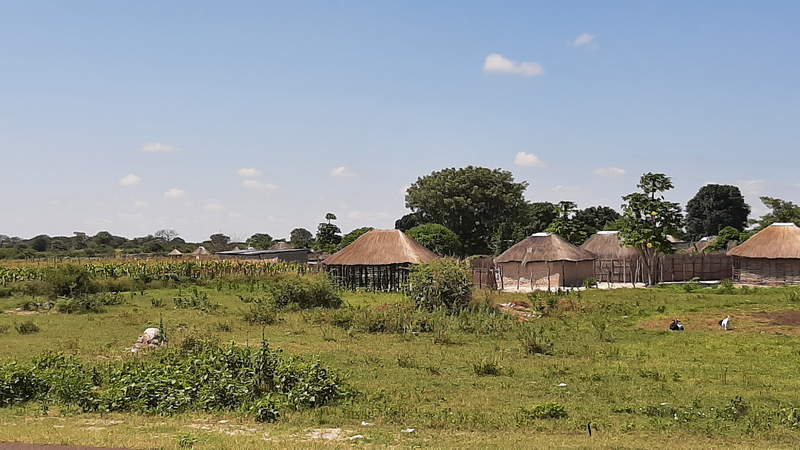
- Village with traditional architecture, maize and pastures in Zambezi region of Namibia, © Domptail, 2023
- • ELNAC - JLU Subproject: Power relations and social metabolism of conservancies and cooperatives
- Central to the fair use of resources for multi-purpose goals and to the integration of various sources of knowledge is the question of power and power relations. By introducing concepts of political and social ecology in the analysis of communities-conservation systems, JLU will address the political aspect by answering the following questions: Who has or attempts to access which resources, and how are livelihood and conservation land uses integrated? For this purpose, we will use the approach of social metabolism, rooted in systems thinking, which combines the dimensions of resource usage in quantity, the sustainability of resource use and the power relations revealed by the usage. JLU will also attempt to reveal more general relations between the distribution of natural resource flows, the trade-offs between livelihood and conservation across case studies.
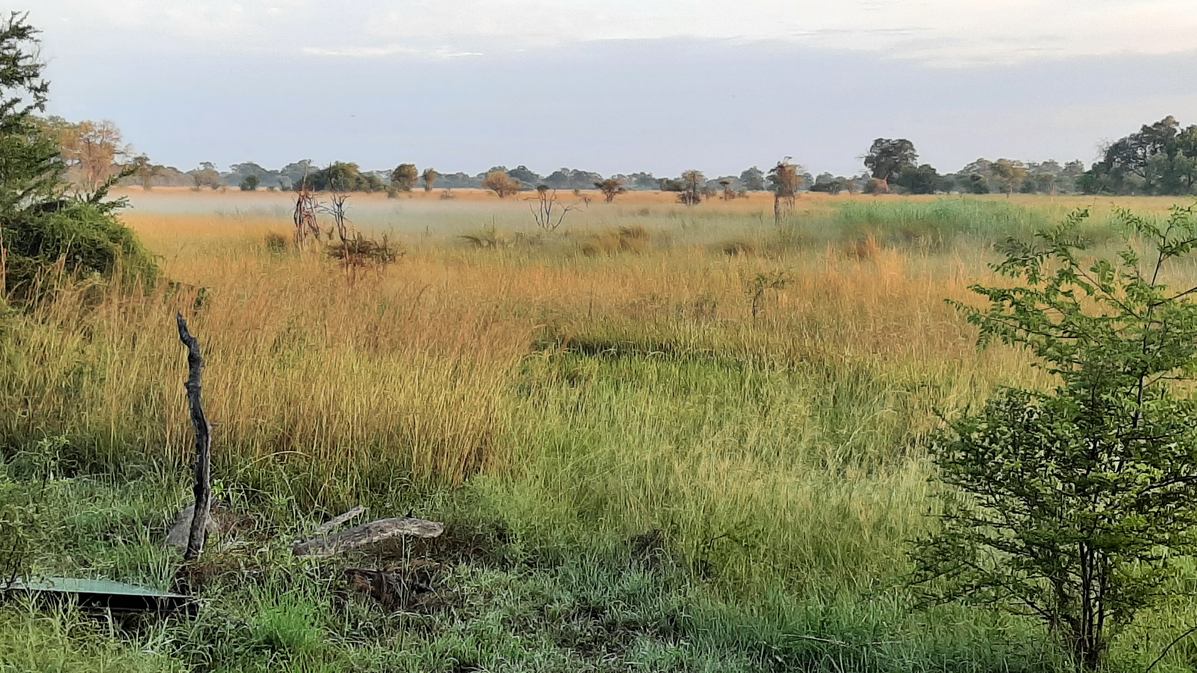
- Nkasa Rupara National park adjointing the Balyerwa conservancy, Zambezi region, © Domptail, 2023
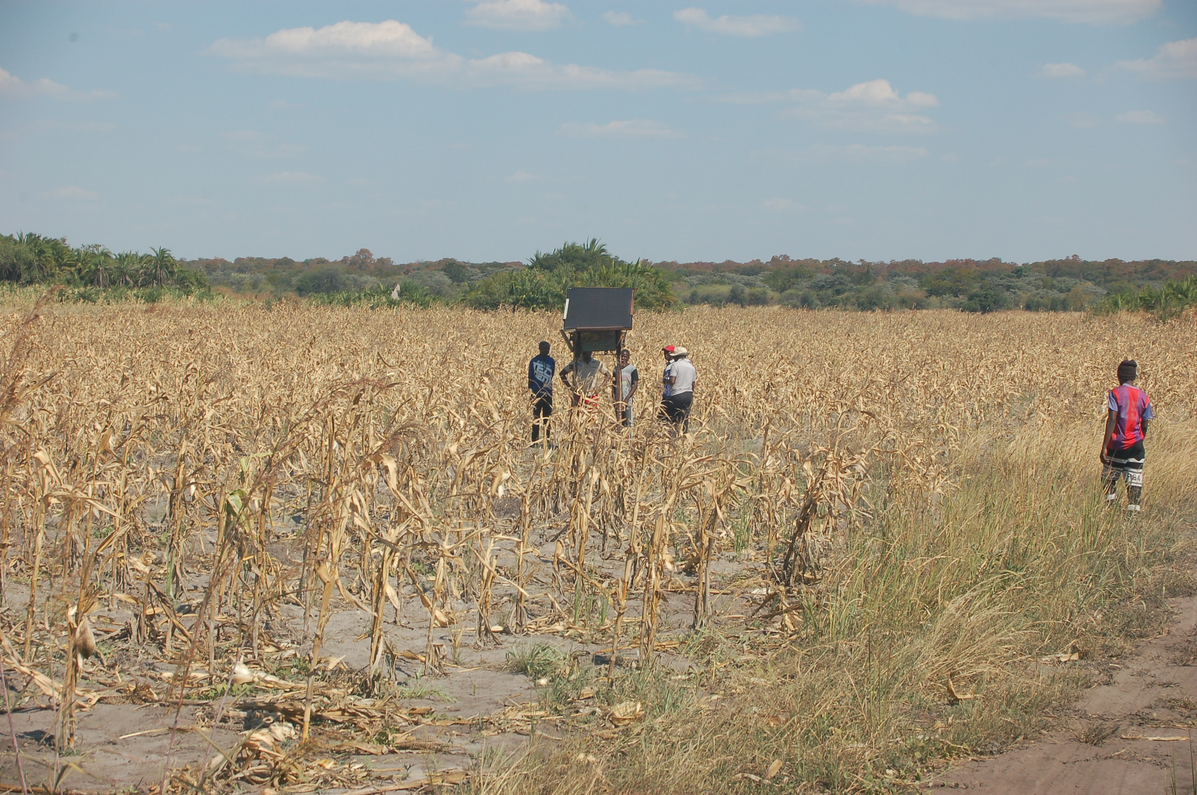
- Community protected maize field with Solar electric fence to prevent elephant raids in Chulo, Angola, © Meyer-Sand, 2023
- JLU will operate on Namibian, Angolan and Zambian sites. It will measure for conservancies the flows of biomass, food and money. JLU will also map property rights and access to resources, and characterize the sites from a political ecology perspective with a power mapping. Key wildlife-human conflicts and trade-offs will be identified by interpreting the material flows in the light of the historical political ecology of the sites. In Namibia, JLU will investigate the structure of the traditional and statutory governance structures overlapping in conservancies to try and understand the biomass appropriation under conservancies from a critical decolonial political ecology lens. By comparing results across sites, we will seek for patterns shaping the equality of resource use for livelihoods within the conservancies. Importantly, we work in cooperation with NGOs (ACADIR and IRDNC) whose members support us make our research more relevant, more useful to them and to the concerned communities, as well as to support us in a fair exchange with the communities making the conservancies.
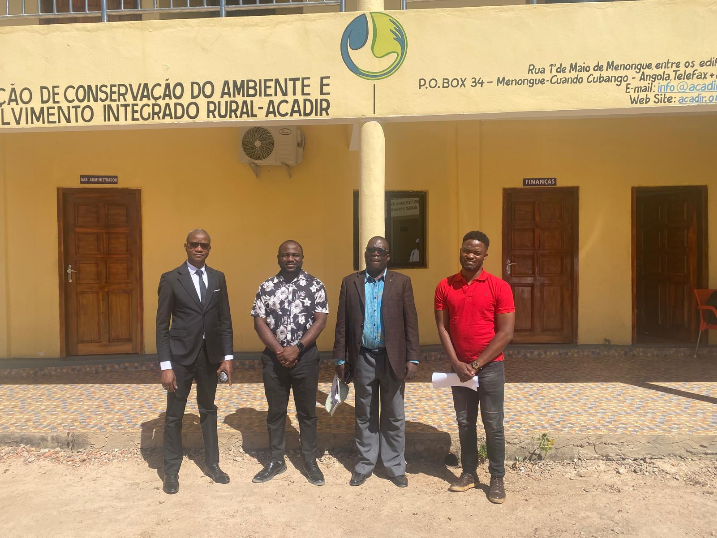
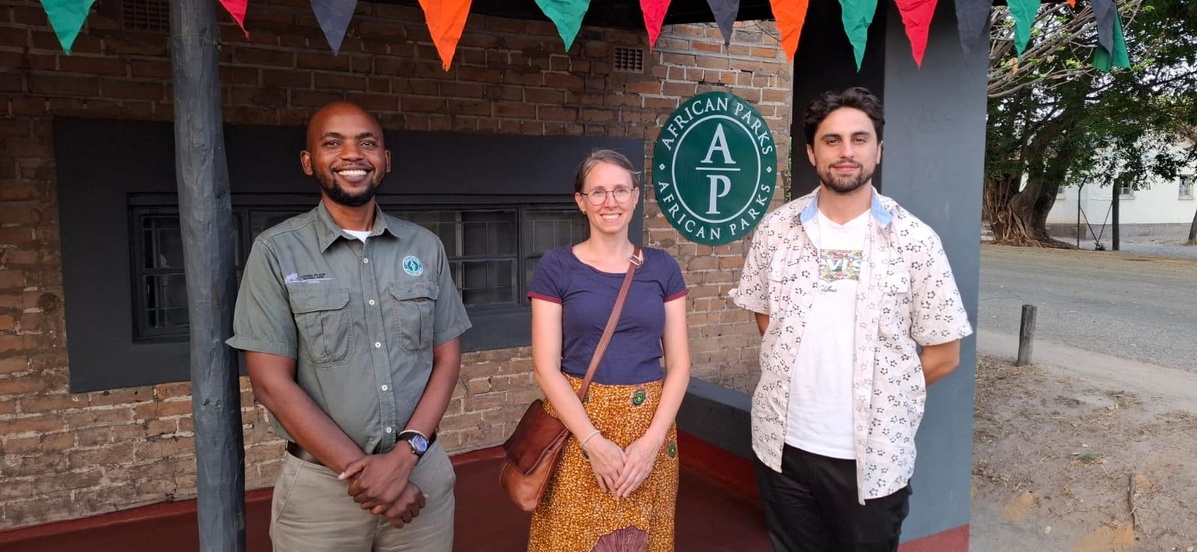
- • Research team at the JLU, Institute for agriultural policy and market research
- Dr. Stéphanie Domptail
- Principle Investigator
- Dr. Chukwuma Ume
- PostDoc Researcher
- Sakeus Kadhikwa
- Doctoral Student
- • Master Students
- • Angolan partners
- Mr. Antonio Chipita Chipita
- The Association for the Conservation of the Environment and Integrated Rural Development (ACADIR), Menongue, Angola
- • Namibian partners
- Dr. Jonathan Kamwi
- Namibia University of Science and Technology, Windhoek, Namibia
- Janet Matota
- Integrated Rural Development and Nature Conservation (IRNDC), Windhoek, Namibia
- • Zambian partners
- Dr. Vincent Nyirenda
- Department of Zoology and Aquatic Sciences, School of Natural Resources, The Copperbelt University, Kitwe, Zambia
- • German Partners
- Dr. Achim Röder
- Remote Sensing and Geoinformatik, University of Trier
- • Project coordination and Botswana partners
- Prof. Richard Fynn
- Prof. Toyin Kolawole
- Okavango Research Institute, University of Botswana, Maun, Botswana
- • Acknowledgements
- ELNAC is implemented under the
- and is funded by the Federal Ministry of Education and Research (BMBF), Germany.
- Acknowledgments
-
The ELNAC-JLU team is grateful for the continued support of its ELNAC and other collaborators. Thanks to Achim Röder and Jari Mahler for the exchange and computation of geodata; Thank you to Jonathan Kamwi and Vincent Nyirenda for their collaboration at the data collection sites, opening doors for us that made our research possible through their staff and their dedication to helping us apply for research permits, Thank you to Jonathan Kamwi and his students: Joseph Haitula, Monica Nande, Adiel Mudzanapabwe and Rosaria Ndemoongela, and Vincent Nyirenda, Harisson Kabalenga, Danny Musenge, for sharing our respective research plans and discussions, Thank you also to the managers of the CBCs who agreed to share data with us, listen to our goals, advise us and integrate us into their work plan: Dr. Maté and Mrs Martha from Peace Parks, and Sally Reece and Felix Mayungo from African Parks, conservancy managers and implementers in Namibia and Zambia (whom we are not naming for privacy reasons); Thank you to our ELNAC partners Dominic Muema from IRDNC, Miguel Hilário, Noel Valentino , Antonio Chipita, José Américo Filipe, Simão Tomás, Samuel Shihinga from ACADIR for trusting us and guiding our work and supporting our interaction and data collection with the communities they work with; Thank you to the assistants (Sheyn, Lobasi, Phiri, Castro), enumerators and translators who supported us in the data collection; Thank you also to all the chiefdom leaders who supported our work and welcomed us to their chiefdom, to their village, whom we will not name to protect their personal data. Finally, we would like to thank our scientific collaborators: Léa Lacan, Michael Bollig, for discussing, sharing and motivating our work.
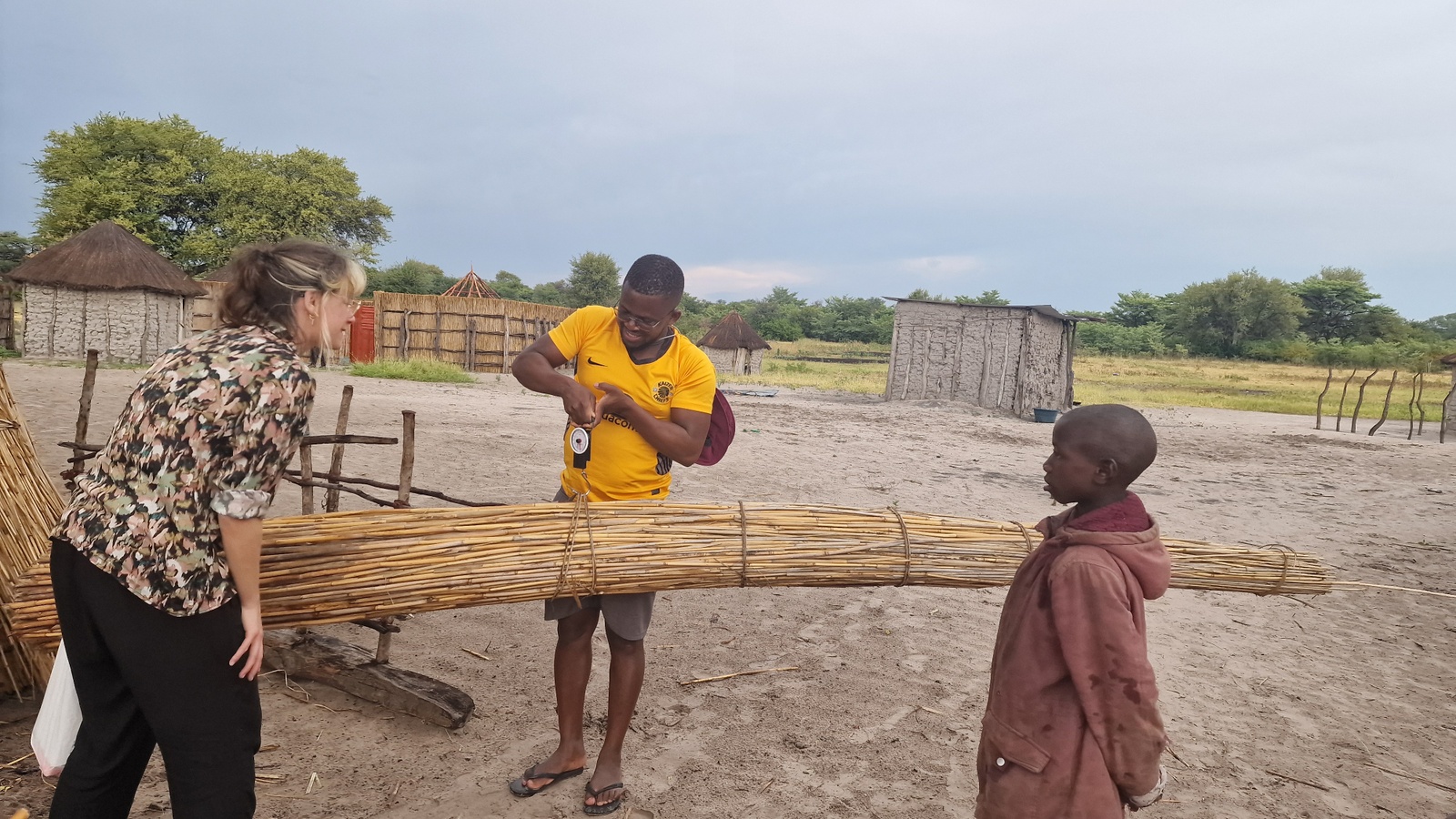
- Reeds bundle weighing in Balyerwa conservancy, 2024, © Samupwa
- • Interim Workshop ELNAC-JLU
- Interim Workshop ELNAC-JLU
-
Participants:
Jenny Fuhrmann Sakeus Kadhikwa Danny Musenge (CBU) Timo Asar Hani Chbib Léa Lacan, University Cologne Stéphanie Domptail Charity Masole Achim Röder, University Trier Chukwuma Ume Martin Petrick Jari Mahler, University Trier
Event took place on the 19th of December 2024 and the 15th and the 16th of January 2025, in Gießen, Germany,
with online participation of non-JLU guests.
Objectives
The ELNAC-JLU Interim Workshop celebrated the completion of the extensive data collection that took place during the first two years of the project. Its aim was to bring together all members of the JLU team to provide an overview of the data collected, the initial results of data analysis and to identify particularities and commonalities in the design, management and outcomes of community-based conservation programmes in three countries of the Kavango-Zambezi (KAZA) Trans-Frontier Conservation Area (TFCA). With a particular focus on data, the workshop devoted time to identifying best practices for data management and storage, as well as specific strategies for data archiving. Finally, we took time to reflect on our position as researchers in the field and in the process of data collection and knowledge creation. As a very international team (Nigerian, German, Syrian, Namibian, Motswana, French, ...) we try to learn about the situations we encounter and try to analyse from our feelings during events and crises in the field. Most importantly, we met as a team and gained a lot of energy and momentum to work towards our individual and collective outcomes until the end of the project in 2025.
Output: Data sets
DATASET_Angola.xlsx – Data collected in Angola
- Title: Social Metabolism data from Mucusso in Angola.
- Description: This dataset was collected in Mucusso Angola using the Koto Tool application. The data were gathered to support a Material Flow Analysis (MFA), which involves tracking resource extraction, including quantities of natural resources and artifacts, as well as biomass extraction from agriculture, fisheries, and forestry. Additionally, the dataset includes information on waste generation and emissions, such as solid waste production, wastewater discharge, and CO₂ emissions. Surveys were conducted in 73 households.
- Geographic Coverage: Mucusso in Angola.
- Temporal Coverage: 16.11.2024 – 14.12.2024.
- Keywords: Material Flow Analysis, Resource Extraction, Waste Emissions, Household Surveys
- Data Format: XLSX
- Data Completeness: Some missing values were identified due to non-responses, data entry errors, or technical issues during data collection. Non-responses were marked as "NA", and data entry errors were cross-checked with survey records where possible. For variables with less than 5% missing data, median or mean imputation was applied, while those with significant gaps were retained as missing to avoid bias. Observations with excessive missing values were excluded from statistical analysis but kept in the raw dataset for reference.
- Data Collection Method: Field surveys, Koto Tool application.
- Property Rights of the Data Set: Available upon request.
- Licensing: dataset is made available under the Creative Commons Attribution 4.0 International (CC BY 4.0) license. Users are free to share, distribute, and adapt the dataset, provided proper attribution is given to the original authors. Any modifications or derivative works must also include proper citation.
- Citation Guidelines: Ume, C., et al. (2024). "Social Metabolism and Material Flow Analysis in Southern Africa: Household Resource Use and Environmental Impact." Justus Liebig University Giessen & Partner Institutions. [Repository Link]
- Contact Information: For inquiries, further details, or collaboration requests, please contact: Dr. Chukwuma Ume, Justus Liebig University Giessen, Email: Chukwuma.ume@agr.jlug.de
- • Data collection
- Data collection
-
ELNAC-JLU operates in 5 sites in the KAZA TFCA: 2 conservancies in Zambezi, Namibia, 1 municipality in Angola, 1 conservancy in Zambia and 1 conservation park in Zambia (Figure 1). Data collection took place from the end of 2023 to the end of 2024. This was a drought year and this bias is taken into account in the data analysis. Our data collection tools include surveys, thematic interviews, focus groups, participatory mapping, observations, physical measurements and the collection of records, registers and secondary data.
The sites were selected with our ELNAC partners from the different countries: ACADIR in Angola, IRNDC and NUST in Namibia and CBU in Zambia. In all sites, we collected detailed household-level data on the extraction, importation, reuse and sale of all types of natural resources, as well as cash and income flows. We collected qualitative and secondary data describing conservation structures and institutions, and wildlife numbers. In 4 sites, we restricted this analysis to a core village within the large CBC institution. In one site, our sample statistically covers the entire conservancy. In addition, participatory maps were developed at conservancy and/or village level, depending on the site, to provide geographically explicit accounts of the use of space (land and resources) by specific communities and associated wildlife. Finally, in Namibia we also collected qualitative and semi-quantitative information on power structures in the CBCs.
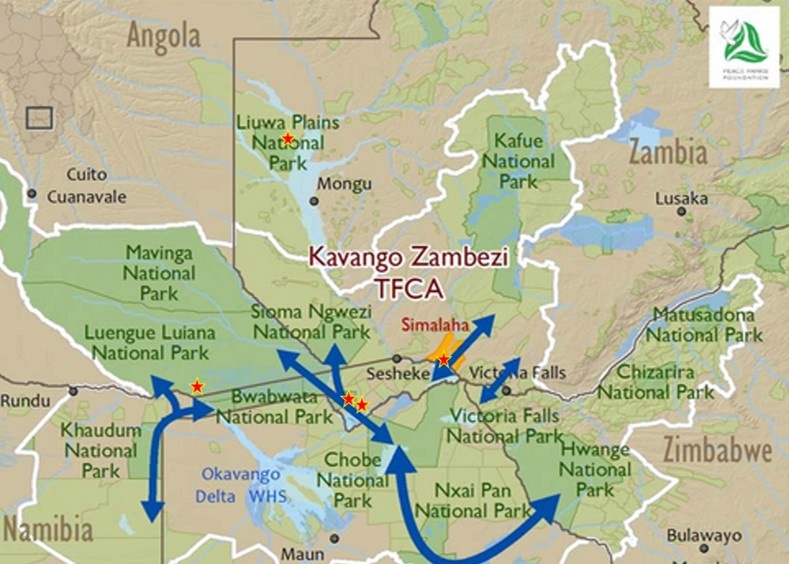
- Figure 1: CBC sites for data collection by ELNAC-JLU (2023 to 2024) (source: modified from Peace Parks). Blue: wildlife movements. Stars: ELNAC-JLU research sites.
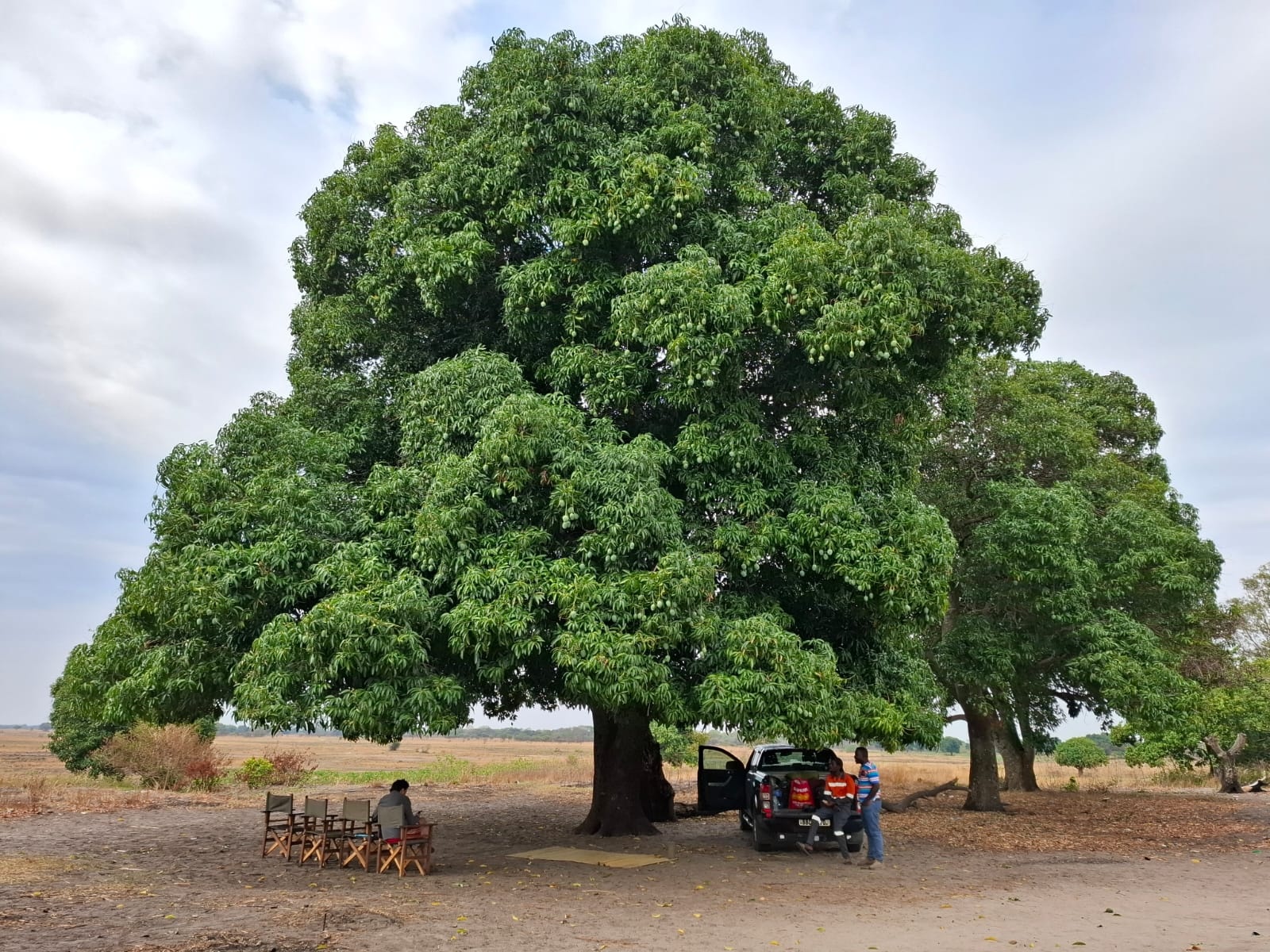
- Research camp at the Kuta, Liuwa Parks, 2024, © Domptail