
Early Modern Period

News
- News
-
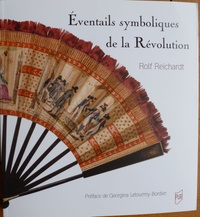
New publication
Rolf Reichardt, Eventails symboliques de la Révolution: Sources iconographiques et relations intermédiales, Rennes 2024, 195 S, 93 coloured illustrations.(farbige Abb.)Printed with support of the FANA (Fan Association of North America)For the first time this publication systematically examines the series produced folding fans of the french revolution on the basis of a representative source corpus consisting of public and private collections. Long only regarded as fashion accessories, upon closer inspection they prove to be an effective medium of political opinion forming, artfully composed of miniature copies of popular caricatures connected with political "Chansons" and extracts from the current text publishing. Allegorizing they put the key thematics of the revolutionary discourse up for discussion.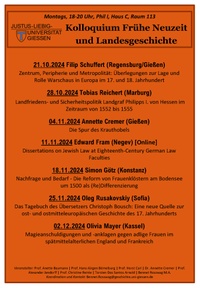
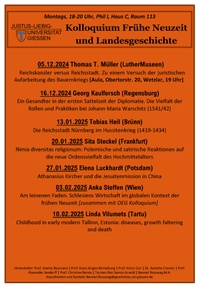
Colloquium of Early Modern and Regional History in the winter semester of 2024/25
The program for earlier colloquiums can be found in the tab "Colloquium".

Lena Frewer wins the first „Security Slam“ in Berlin
„History matters …“: Lena Frewer was able to succeed in Germanys first Security Slam in Berlin with her contribution called „Turning point in the security policy 500 years ago“. She presented the topic of her dissertation on public peace politics/policy in the empire after the eternal public peace, which is being supervised by Prof. Horst Carl in the context of the TRR 138 „Dynamics of Security“.
The event, which was funded/supported by the "Bundeszentrale für politische Bildung" (Federal Center of Political Education) and organized in cooperation with the Friedrich-Ebert-Stiftung (FES), the "Deutsche Gesellschaft für Auswärtige Politik (DGAP)" (German Society for Foreign Politics) and scienceslam.de, took place on the 3rd Mai 2023 in the Friedrich-Ebert-Stiftungs' fully occupied conference room in Berlin. The candidates presented their research in 10 minute long talks and contented for the slam crown of the turning point. The topics ranged from international law as a russian weapon, the role of gender in war, space as a new room for conflict all the way to the measurement of strategical culture, cyber warfare and Deepfakes. The fact that Lena Frewer was declared as the winner by the audience even though she presented a historical turning point was a surprise. Her performance can be seen on Youtube:
https://www.youtube.com/watch?v=siphHzBNxBo&feature=youtu.be
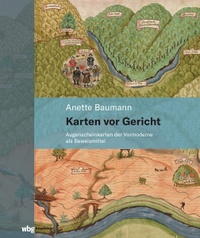 Decision finding at the imperial chamber court. Judge's notes in the long 16th century.Entscheidungsfindung am Reichskammergericht. Richternotizen im langen 16. Jahrhundert.The project, which is supported by the DFG with over 800.000 Euro, wants to examine the decision finding processes of the judges at the imperial chamber court with the help of personal notes of the judges, newly found by Prof. Dr. Anette Baumann. This has not been possible until now due to the lack of sources, as the official protocols have been burned in 1689/90. The goal is to get a more comprehensive understanding of the political function of the the Law in the courts formatting and peak phase in the 16th century using the decision finding processes of the judges. This is achieved by evaluating the judges' personal notes with regard to the most frequently named and latest discussion topics procedure, religion, subjects and jews in combination with other sources. Moreover, the project also has the goal to make the difficult source category "judges' notes" more accessible for coming generations of researcher. To achieve this goal, the unique protocol book of Mathias Neser (judge from 1536-1543), which, due to the close connection of the emperor and his councilors in the times of the Schmalkaldic League, also describes the extrajudicial negotiations of the court, is being edited by Dr. Evelien Timpener in a synoptic representation.Anette Baumann published her new book related to his topic in 2022: Maps in court- Visual appearance maps in early modernity as evidence:
Visual appearance maps are fascinating hidden picture puzzles and true to scale maps which originated at the highest court of the Holy Roman Empire, the imperial chamber court (1495 to 1806). Used as evidence, they were manufactured by renowned artists and cartographers. As Prof. Dr. Anette Baumann (member of the institute) shows, visual appearance maps show that they are a historical construction, not only affected by artistic and natural scientific influences, but also judicial practices. The human view becomes the deciding factor with which evidence, facts and evidence can be redefined.

Book presentation
Buchvorstellung
Visual appearance maps are fascinating hidden picture puzzles and true to scale maps which originated at the highest court of the Holy Roman Empire, the imperial chamber court (1495 to 1806). Used as evidence, they were manufactured by renowned artists and cartographers. As Prof. Dr. Anette Baumann (member of the institute) shows, visual appearance maps show that they are a historical construction, not only affected by artistic and natural scientific influences, but also judicial practices. The human view becomes the deciding factor with which evidence, facts and evidence (?) can be redefined.
Augenscheinkarten sind faszinierende Wimmelbilder und maßstabsgerechte Karten, die am höchsten Gericht des Heiligen Römischen Reiches, am Reichskammergericht (1495 bis 1806), entstanden. Der Beweisführung dienend, wurden sie von berühmten Künstlern und Kartografen hergestellt. Wie Prof. Dr. Anette Baumann (Mitglied des Instituts) zeigt, machen uns Augenscheinkarten deutlich, dass Sehen eine historische Konstruktion ist, auf die nicht nur künstlerische und naturwissenschaftliche Einflüsse wirken, sondern auch rechtliche Praktiken. Der Blick des Menschen wird zum entscheidenden Faktor, über den sich Evidenz, Tatsache und Beweis stets neu definieren lassen.
Prof. Dr. Anette Baumann will present her new book on the 19th december 2022 at 6pm c.t. in room C113 in the Philosophikum I.
Prof. Dr. Anette Baumann wird Ihr neues Buch am 19.12.2022 um 18:00 Uhr c.t. am Philosophikum I in Raum C113 präsentieren.

Price of the "Zeitschrift für Weltgeschichte 2022" (Journal for global history)
Preis der Zeitschrift für Weltgeschichte 2022
Richard Herzog's dissertation "Nahua- Stimmen aus dem kolonialen Zentralmexiko: für das Überleben ihrer politisch-gesellschaftlichen Überzeugungen (frühes 17. Jahrhundert)" (Nahua - voices from colonial central mexico: for the survival of their political-social convictions (early 17th century) has been awarded the price of the journal for global history for the best global historical first publication! The price is endowed (?) with 2000€. The dissertation, supervised by Prof. Horst Carl, was written at the department for early modernity and financed with a scholarship from the GCSC. We congratulate to this success!
New video on the imperal chamber court in Wetzlar
Neues Video über das Reichskammergericht in Wetzlar
The department for early modernity is concerned with the topics security, violence, war and peace. That is why a close connection with the research center for the imperial chamber court in Wetzlar exists. A court which was already founded in 1495 to combat certain forms of violence in the empire. The following videoclip (ca. 15 minutes) gives insights in the work of the court, its origins and history, as well as the associated research.
https://www.youtube.com/watch?v=gxwgOm923TQ (externer Link, YouTube)
Science price history and regional studies 2020 goes to scientist from Gießen
Wissenschaftspreis Geschichte und Landeskunde 2020 geht an Gießener Wissenschaftlerin
For her dissertation „Dynastie und Konfession: Konfessionsverschiedene Ehen in den Grafenhäusern Nassau, Solms und Isenburg-Büdingen 1580-1648“ (Dynasty and confession: different confessional marriages in count houses (?) Nassau, Solms, and Isenburg-Büdingen 1580-1648), Sylvia Kepsch is being awarded with one of this year's two Science prices for Hessian history and regional studies. The dissertation was written at the Historical Department of the JLU Gießen and supervised by Prof. Horst Carl (history of early modernity).
At the announcement of this year's winners, science minister Dorn put special focus on the big variety of topics in the submitted works. Miss Kepsch asserted herself with a fundamental study on different confessional marriages in the count houses Nassau, Solms, and Isenburg-Büdingen around 1600. In her study she conveys to date unknown insights in the maneuvering spaces of women as political actors. With detailed source analysis, she was able to comprehend how the wives in the ruling houses knew how to use their confession to conduct their own personal and church policies for example. The work has exemplary significance for the question, which role especially female actors play in confessional historical developments.
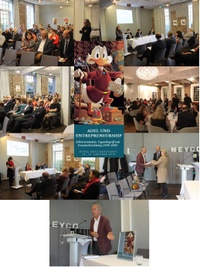 Ehrentagung für Prof. Dr. Horst Carl 10.-12. Oktober 2019Professor Horst Carl, der Sprecher des gemeinsamen Forschungsverbunds der Universitäten Marburg, Gießen und des Herder-Instituts zu „Dynamiken der Sicherheit“ (SFB 138) vertritt seit 18 Jahren die Geschichte der Frühen Neuzeit am Historischen Institut (FB 04) der JLU.Zu Ehren seiner Leistungen im und für das Fach Geschichte und für seine langjährige Tätigkeit in Forschung und Lehre fand aus Anlass seines 60. Geburtstag vom 10. bis 12. Oktober ein Symposium statt. Die Tagung mit dem Titel ‚Adel und Entrepreneurship. Selbstverständnis, Tugendbegriff und Selbstwahrnehmung (1400–1900)‘ befasste sich drei Tage lang mit dem Verhältnis zwischen dem Adel als einer der sozialen Eliten der historischen Gesellschaften Europas und seinem bislang in der Forschung wenig beachteten, ökonomisch an Gewinn orientiertem Handeln. In 15 Vorträgen wurden verschiedene Handlungsfelder wie Militär, Manufakturwesen oder Alchemie vorgestellt sowie das Handeln unterschiedlicher Adelsränge exemplarisch beleuchtet. Ca. 70 Personen, darunter aktuelle und ehemalige Mitarbeiterinnen und Mitarbeiter, Kolleginnen und Kollegen des Fachbereichs sowie Frühneuzeithistoriker u.a. aus Frankfurt, Marburg, Mainz, Freiburg, Münster, Osnabrück, Jena und Berlin waren zu der Tagung geladen. Die Veranstaltung fand aufgrund der Großbaustelle um das Philosophikum I nicht wie geplant im Gästehaus der JLU statt, sondern im Hotel Heyligenstaedt.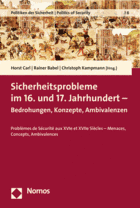
Neuerscheinung:
Horst Carl; Rainer Babel; Christoph Kampmann (Hg.), Sicherheitsprobleme im 16. und 17. Jahrhundert, Baden-Baden 2019

Prof. Horst Carl neuer Sprecher des SFB/TRR 138 "Dynamiken der Sicherheit"
Seit Januar 2018 hat Prof. Horst Carl die Funktion des Sprechers des SFB/TRR 138 "Dynamiken der Sicherheit" (Gießen/Marburg) übernommen. Für die zweite Förderphase (2018-2021) ist die JLU Gießen Sprecherhochschule dieses gemeinsam mit der Universität Marburg betriebenen Verbundprojektes. [mehr...]


Office Hours
- Office Hours
-
Secretary, Room C 110 (Office Hours for Students):
Office hours after prior arrangement via E-Mail (Ingrun.Berg)
Prof. Dr. Anette Baumann
Office hours after prior arrangement via E-Mail (anette.baumann)
Prof. Dr. Horst Carl
Office hours in the winter semester 2024/25: Only after prior arrangement via E-Mail (Horst.Carl)
Dr. Anette Cremer
Office hours after prior arrangement via E-Mail (annette.cremer)
Alexander Jendorff
Office hours after prior arrangement via E-Mail (alexander.jendorff)
Lena Frewer, M.A.
Office hour, Tuesdays, 3-4 p.m., Room C112. Arrangement über StudIP.
Bennet Rosswag, M.A.
Office hour, Mondays 16-17 p.m., or after prior arrangement, in person (Room C105) or digitally (bennet.rosswag)
Torsten Dos Santos Arnold, M.A.
Office hours after prior arrangement via E-Mail (torsten.dos-santos-arnold)
Dr. Evelien Timpener
Office hours after prior arrangement via E-Mail (evelien.timpener)
Members
- Members
-
| Professor | Secretary | Honorary Professor | Adjunct Professor | Senior Researcher and Lecturer (Akademische Ratsstelle) | Research Staff | Research Staff in Projects | Student Asssistants | Teaching Assignment | Former Members |
Professor
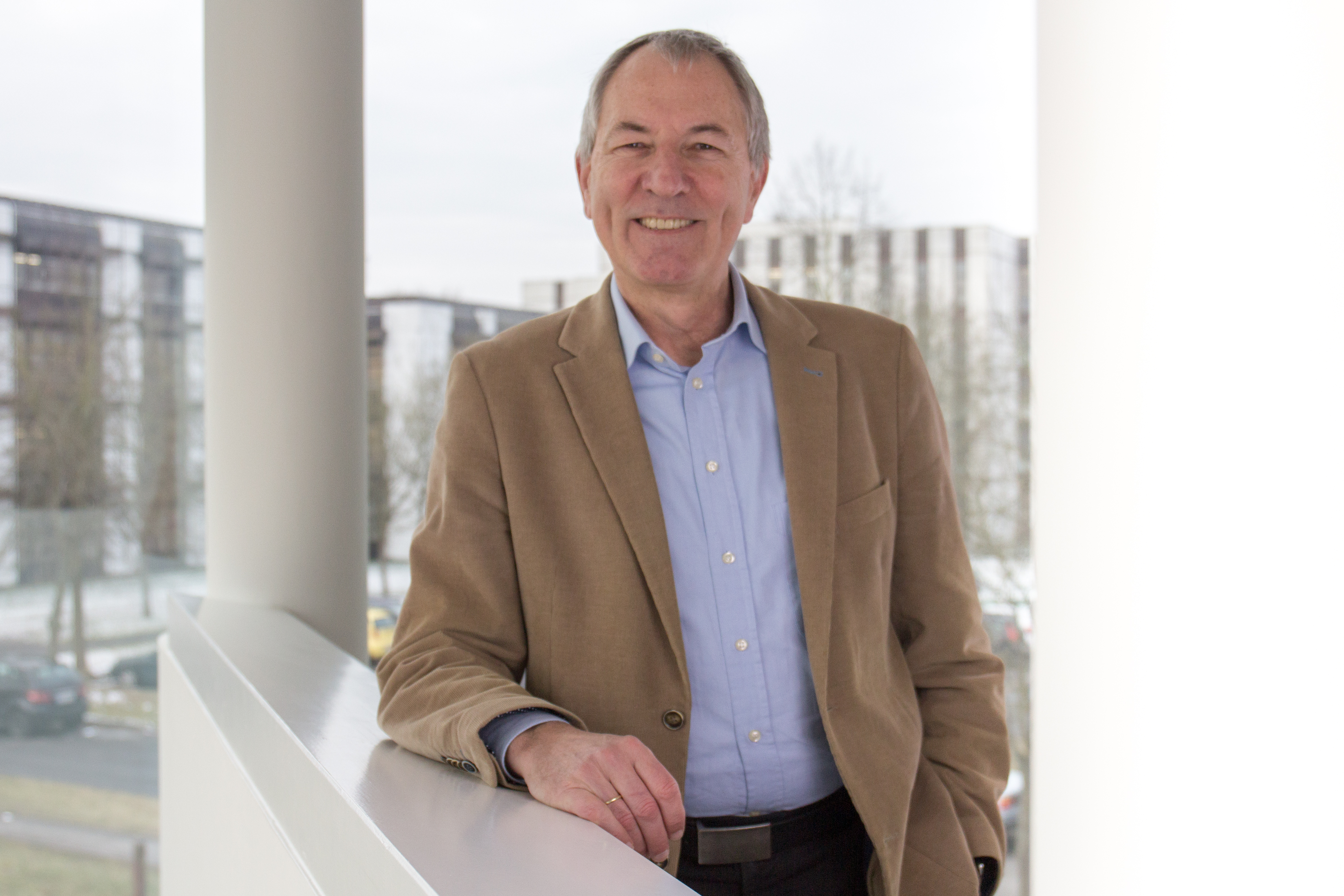
Prof. Dr. Horst Carl [more...]
Tel: 0049-641-99-28190
Secretary: 0049-641-99-28171
Fax: 0049-641-99-28169
Otto-Behaghel-Str. 10, D-35394 Gießen, House C Room 104Secretary

Tel: 0049-641-99-28171
Ingrun.Berg@geschichte.uni-giessen.de
Fax: 0049-641-99-28169
Otto-Behaghel-Str. 10, D-35394 Gießen, House C Room 110Honorary Professor
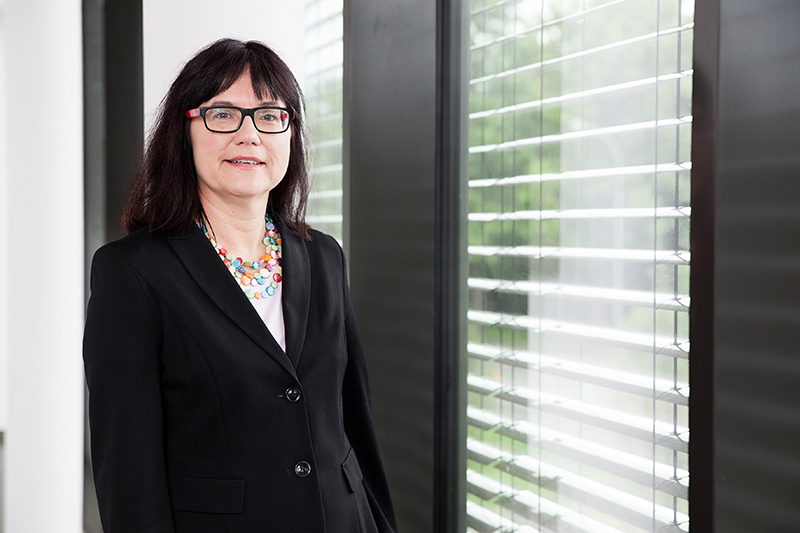
hon. Prof. Anette Baumann [more...]
Tel: 0049-641-99-28192
Otto-Behaghel-Str. 10, D-35394 Gießen, House C Room 106Anette.baumann@reichskammergericht.de
Adjunct Professor
apl. Prof. Dr. Alexander Jendorff [more...]
Tel: 0049-641-99-28171
Otto-Behaghel-Str. 10, D-35394 Gießen, House C Room 106Senior Researcher and Lecturer (Akademischer Rat)
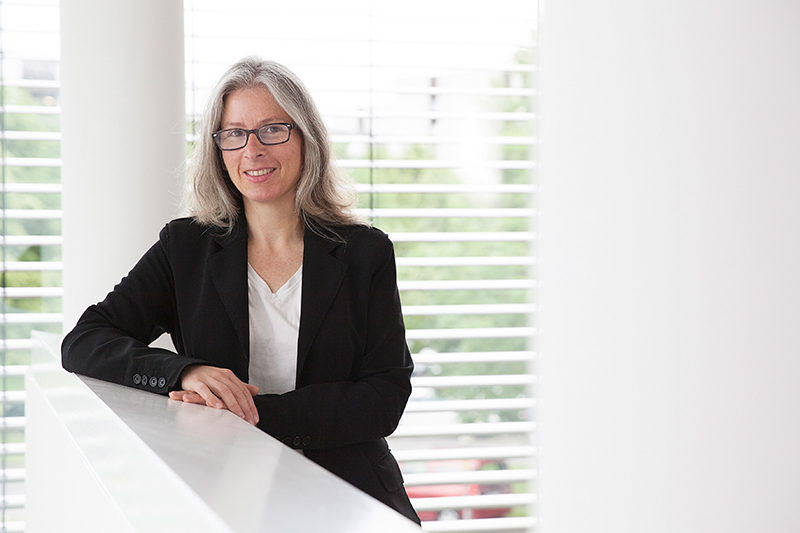
Dr. Annette Cremer [more...]
Tel: 0049-641-99-28196
annette.cremer@geschichte.uni-giessen.de
Otto-Behaghel-Str. 10, D-35394 Gießen, House C Room 103cResearch Staff
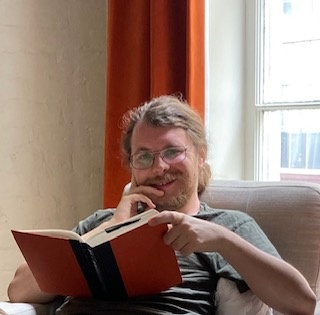
Bennet Rosswag M.A. [more...]
Otto-Behaghel-Str. 10, D-35394 Gießen, House C Room 105
Tel: 0049-641-99-28191
Office hours Mondays 4-5 p.m., or after prior arrangement

Torsten Dos Santos Arnold, M.A. [more...]
Otto- Behaghel-Str. 10, D-35394 Gießen, House C Room 103a
Tel: 0049-641-99-28193
Fax: 0049-641-99-28169
torsten.dos-santos-arnold@geschichte.uni-giessen.de
Office hours after prior arrangement
Research Staff in Projects

Katja Berndt M.A. [more...]
Otto-Behaghel-Str. 10, D-35394 Gießen, House C Room 103
Katja.Berndt@geschichte.uni-giessen.de
SFB/TRR 138 "Dynamiken der Sicherheit", Teilprojekt A01: Geiselstellungen
(SFB/TRR 138 "Dynamics of Security", Project A01: Hostages)

Lena Frewer [more...]
Otto-Behaghel-Str. 10, D-35394 Gießen, House C Room 233aLena.Frewer@geschichte.uni-giessen.de
SFB/TRR 138 "Dynamiken der Sicherheit", Teilprojekt B01: Landfrieden
(SFB/TRR 138 "Dynamics of Security", Project B01: Public Peace)

Winand Tremmel [more...]
Otto-Behaghel-Str. 10, D-35394 Gießen, House C Room 233a
SFB/TRR 138 "Dynamiken der Sicherheit", Teilprojekt B01: Landfrieden
(SFB/TRR 138 "Dynamics of Security", Project B01: Public Peace)

Dr. Evelien Timpener [more...]
Otto-Behaghel-Str. 10, D-35394 Gießen, House C Room 242
Entscheidungsfindung am Reichskammergericht. Richternotizen im langen 16. Jahrhundert
Office hours after prior arrangement
Student Assistants
Tizian Hollerith
Tel: 0049-641-99-28195
Otto-Behaghel-Str. 10, D-35394 Gießen, House C Room 103b
Jakob Schaaf
Tel: 0049-641-99-28195
Otto-Behaghel-Str. 10, D-35394 Gießen, House C Room 103b
Lucas Magalhaes Schessl
Tel: 0049-641-99-28195
Otto-Behaghel-Str. 10, D-35394 Gießen, House C Room 103b
Benita Stein
Tel: 0049-641-99-28195
Otto-Behaghel-Str. 10, D-35394 Gießen, House C Room 103bTeaching Assignment
Dr. Stephan Wendehorst [more...]
Tel: 0049-641-99-28196
Otto-Behaghel-Str. 10, D-35394 Gießen, House C Room 106Former Members
hon. Prof. Dr. Rolf Reichardt [more...]
→Top of the page


Teaching
- Teaching
-
You can find all courses in Early Modern History here: Elektronisches Vorlesungsverzeichnis
You can find the courses of each lecturer on their individual page in the category "Members".
Research
- Research
-
Individual research activities:
- Habilitations and dissertations
- Encyclopedia of revolutionary iconography 1789-1889 ('Lexikon der Revolutions-Ikonographie 1789-1889')
- Descisionmaking processes at the Imperial High Chamber Court. Judge's notes in the long 16th century ('Entscheidungsfindung am Reichskammergericht. Richternotizen im langen 16. Jahrhundert')
Collaborative research activities:
active:
completed:
- Academic editorship Encyclopedia of Early Modernity ('Fachherausgeberschaft „Enzyklopädie der Neuzeit“')
- Research Training Group 'Transnational media events from Early Modernity to present' ('Graduiertenkolleg „Transnationale Medienereignisse von der Frühen Neuzeit bis zur Gegenwart"')
Research networks:
Colloquium
- Colloquium
-


Links
- Links for Early Modernity
-
Portals
Databanks
Research Tools
- Library system University Giessen: Homepage of the JLU university library and its various decentralized topical branches
- historicum.net
- perspectivia.net
Tips for Students
- Recommendation for course papers
- List of Examiners
- Online Tutorial History (University of Constance): Recommendations on the subject and studying history
Research
- Research Training Group 'Transnational media events from Early Modernity to present' ('Graduiertenkolleg „Transnationale Medienereignisse von der Frühen Neuzeit bis zur Gegenwart"')
- Graduate Centre for the Study of Culture (GCSC)