Softness is a material property that plays an essential role in our daily interactions with objects. The sense of touch, or haptic sense, provides us with valuable information about the shapes, functions, and material properties of objects. We use the sense of haptic softness in a wide variety of situations, from assessing the ripeness of the fruit we eat to the suitability of the clothes we wear. Accordingly, describing an object as soft can encompass a wide range of materials including fabric, hand cream, sand, or cat hair. In the engineering literature, the perception of haptic softness is commonly defined by compliance: the degree to which an object can be physically deformed by the effect of external forces. Consequently, the studies investigating different components of softness equated softness to the compliance of elastic materials. However, recent studies have shown that the perception of softness in humans cannot be explained by a single dimension. Instead, it has been determined that there are multiple perceptual dimensions of softness, each associated with specific hand movements (exploratory procedures) that can be used to explore and evaluate the softness of different objects. These perceptual dimensions of softness include surface softness, fluidity (viscosity), granularity, and deformability. Furthermore, people adapt their hand gestures and haptic explorations depending on the characteristics of the touched object, the information they want to acquire, and the interaction of the object's properties and the desired information. These new developments can contribute not only to the understanding of the perception of softness but also to improving the grasping and exploration abilities of autonomous robots.
M. Cavdan and D. Dövencioglu, “Dokunsal Yumuşaklik Algisina i̇li̇şki̇n bi̇r i̇nceleme,” Ankara Üniversitesi Dil ve Tarih-Coğrafya Fakültesi Dergisi, 2023.
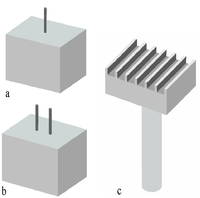
Touch is susceptible to various aftereffects. Recent findings on tactile distance perception demonstrate that when an area of the body is repeatedly touched at two points separated by a given distance, subsequently presented smaller distances are perceived as smaller and larger distances as larger. Here we investigate whether adaptation to a tactile distance transfers to the perception of coarse textures’ roughness. Additionally, we examine whether this transfer is orientation-specific, which is typical for low-level aftereffects. On each trial, the tip of the left index finger was adapted either 1) to a tactile two-point distance of 4 mm applied along the length of the finger, 2) the same distance applied across the width of the finger or 3) to single indentations. After adaptation to a two-point distance, participants systematically perceived subsequently presented gratings with smaller groove distances as being less rough–-when the orientation of the adapted distance matched that of the texture. This reflects an aftereffect transfer for the orientation-congruent condition only. The results suggest that the processing of distance between two points on the skin is involved in the computation of texture, and that texture is a basic somatosensory feature computed at relatively early stages of sensory processing.
M. Jeschke, K. Drewing and E. Azañón, "The Tactile Distance Aftereffect Transfers to Roughness Perception," 2023 IEEE World Haptics Conference (WHC), Delft, Netherlands, 2023, pp. 8-13, doi: 10.1109/WHC56415.2023.10224476.
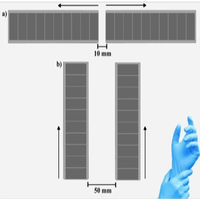
Haptic perception is inherently active. People utilize different exploratory strategies that affect their perception. For example, people perceive small shapes more precisely when the finger explores them laterally as compared to anteroposterior, and they adjust their exploratory direction in a corresponding task to increase perceptual performance. Here, we investigated how prescribed movement direction of the finger affects texture perception and associated exploratory movements. Texture perception is based on spatial cues from static touch and temporal cues from active movement. We used stimuli that maximized the relevancy of movement-related temporal cues. The finger was moving lateral or anteroposterior to the body, but always orthogonal to the texture orientation. In addition, one group of participants explored while wearing a glove that further reduced the availability of spatial cues, another group explored without glove. Participants performed a two-interval forced choice task choosing in each trial the stimulus with higher spatial frequency. Participants applied higher force and stroked faster in anteroposterior orientation than in lateral orientation. Further, participants wearing gloves stroked the textures more slowly. Perceptual performance did not differ between conditions. We conclude that participants adapted their movement strategies to the respective exploratory constraints in ways to maintain good perception.
D. Katircilar and K. Drewing, "The Effects of Movement Direction and Glove on Spatial Frequency Discrimination in Oriented Textures," 2023 IEEE World Haptics Conference (WHC), Delft, Netherlands, 2023, pp. 313-318, doi: 10.1109/WHC56415.2023.10224465.
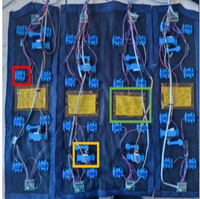
The human torso encompasses a large haptic perceptual area where cutaneous feedback can be delivered. Haptic vests can provide different effects in order to present information or enrich and even alter perception. Over the last decades, different haptic vest designs have been proposed for use in spatial navigation aid and virtual environments. However, most of the designs so far used one type of stimulation only. Here we present a haptic vest design that can provide feedback in three cutaneous modalities: vibrotactile feedback, punctual force, and warmth. We conducted a first evaluation experiment to study the suitability of our design. We conclude that our design is suited to deliver multimodal feedback to the torso area. The incorporation of different haptic modalities on the vest allows the presentation of diverse perceptual effects that can be beneficial in altering human time perception.
B. Celebi, M. Cavdan and K. Drewing, "Design and Evaluation of a Multimodal Haptic Vest," 2023 IEEE World Haptics Conference (WHC), Delft, Netherlands, 2023, pp. 56-63, doi: 10.1109/WHC56415.2023.10224374.
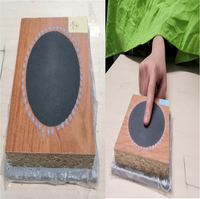
Objects’ material properties are essential not only in how we use and interact with them but also in eliciting affective responses when in contact with the body. Such affective experiences are of particular interest because they likely strongly impact our daily interactions with materials. We examined whether exploration time and surface size could influence affective responses to rough stimuli. Here, participants made pleasantness and arousal judgments after actively exploring sandpaper stimuli of different sizes with varying roughness levels under different time constraints. Findings confirm that increased surface roughness is associated with decreased perceived pleasantness; however, arousal did not systematically covary with roughness. We didn’t find an effect of exploration time on perceived pleasantness or arousal, but there were interactions between grit size and surface size. Overall, the direction of the effects of grit size on pleasantness was similar for both surface sizes. However, the slopes of increase in pleasantness relative to grit size varied depending on surface size. Effects on arousal were unrelated and small. We suggest that exploration time had little influence on the perceived magnitude of affective reactions to roughness. However, surface size may influence not only perceived roughness but also the perceived pleasantness of rough stimuli.
L. P. Y. Lin, M. Cavdan, K. Doerschner and K. Drewing, "The Influence of Surface Roughness and Surface Size on Perceived Pleasantness," 2023 IEEE World Haptics Conference (WHC), Delft, Netherlands, 2023, pp. 417-424, doi: 10.1109/WHC56415.2023.10224384.
Softness is an important material property that can be judged directly, by interacting with an object, but also indirectly, by simply looking at an image of a material. The latter is likely possible by filling in relevant multisensory information from prior experiences with soft materials. Such experiences are thought to lead to associations that make up our representations about perceptual softness. Here, we investigate the structure of this representational space when activated by words, and compare it to haptic and visual perceptual spaces that we obtained in earlier work. To this end, we performed an online study where people rated different sensory aspects of soft materials, presented as written names. We compared the results with the previous studies where identical ratings were made on the basis of visual and haptic information. Correlation and Procrustes analyses show that, overall, the representational spaces of verbally presented materials were similar to those obtained from haptic and visual experiments. However, a classifier analysis showed that verbal representations could better be predicted from those obtained from visual than from haptic experiments. In a second study we rule out that these larger discrepancies in representations between verbal and haptic conditions could be due to difficulties in material identification in haptic experiments. We discuss the results with respect to the recent idea that at perceived softness is a multidimensional construct.
Cavdan, M., Goktepe, N., Drewing, K. et al. Assessing the representational structure of softness activated by words. Sci Rep 13, 8974 (2023). https://doi.org/10.1038/s41598-023-35169-6
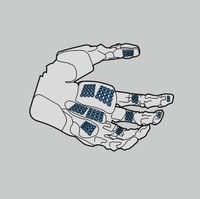
Human manual dexterity relies critically on touch. Robotic and prosthetic hands are much less dexterous and make little use of the many tactile sensors now available. We propose a framework modeled on the hierarchical controllers of the sensorimotor nervous system to link sensing to action in human-in-the-loop, haptically enabled, artificial hands.
Seminara, L., Dosen, S., Mastrogiovanni, F., Bianchi, M., Watt, S., Beckerle, P., Nanayakkara. T., Drewing. K., Moscatelli, A., Klatzky, R. & Loeb, G. (2023). Science Robotics 8, eadd5434. https://doi.org/10.1126/scirobotics.add5434
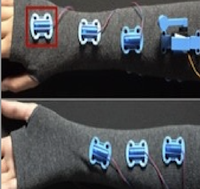
Temporal information plays a crucial role in human everyday life. Yet, perceived time is subject to distortions. Emotion, for instance, is a powerful time modulator in that emotional events are perceived longer than neutral events of the same length. However, it is unknown how exposure to emotional stimuli influences the time perception of a simultaneous neutral tactile event. To fill this gap, we tested the effect of emotional auditory sounds on the perception of neutral vibrotactile feedback. We used neutral and emotional (i.e., pleasant-high arousal, pleasant-low arousal, unpleasant-high arousal, and unpleasant-low arousal) auditory stimuli from the International Digitized Sound System (IADS). Tactile information was a vibrotactile stimulus at a fixed intensity and presented through a custom-made vibrotactile sleeve. Participants listened to auditory stimuli which were temporally coupled with vibrotactile stimulation for 2,3,4, or 5sec. Their task was to focus on the duration of vibrotactile information and reproduce elapsed time. We tested the effects of valence and arousal of auditory stimuli on the perceived duration of vibrotactile information. Simultaneously presented auditory stimuli, in general, lengthened the perceived duration of the neutral vibrotactile information compared to neutral auditory stimuli. We conclude that emotional events influence time perception of simultaneous neutral haptic events.
Cavdan, M., Celebi, B., Drewing, K. (2023). Simultaneous Emotional Stimuli Prolong the Timing of Vibrotactile Events, in IEEE Transactions on Haptics. https://doi.org/10.1109/TOH.2023.3275190.
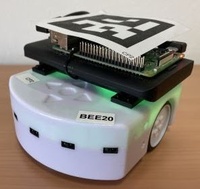
Many large-scale multi-robot systems require human input during operation in different applications. To still minimize the human effort, interaction is intermittent or restricted to a subset of robots. Despite this reduced demand for human interaction, the mental load and stress can be challenging for the human operator. A specific effect of human-swarm interaction may be a hypothesized change of subjective time perception in the human operator. In a series of simple human-swarm interaction experiments with robot swarms of up to 15 physical robots, we study whether human operators have altered time perception due to the number of controlled robots or robot speeds. Using data gathered by questionnaires, we found that increased swarm size shrinks perceived time and decreased robot speeds expand the perceived time. We introduce the concept of subjective time perception to human-swarm interaction. Future research will enable swarm systems to autonomously modulate subjective timing to ease the job of human operators
Kaduk, J., Cavdan, M., Drewing, K., Vatakis, A., & Hamann, H. (2023). Effects of human-swarm interactions on subjective time perception: Swarm size and speed. HRI 23. https://doi.org/10.1145/3568162.3578626
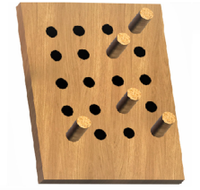
The approximate number system (ANS) is thought to be an innate cognitive system that allows humans to perceive numbers (>4) in a fuzzy manner. One assumption of the ANS is that numerosity is represented amodally due to a mechanism, which filters out nonnumerical information from stimulus material. However, some studies show that nonnumerical information (e.g., spatial parameters) influence the numerosity percept as well. Here, we investigated whether there is a cross-modal transfer of spatial information between the haptic and visual modality in an approximate cross-modal number matching task. We presented different arrays of dowels (haptic stimuli) to 50 undergraduates and asked them to compare haptically perceived numerosity to two visually presented dot arrays. Participants chose which visually presented array matched the numerosity of the haptic stimulus. The distractor varied in number and displayed a random pattern, whereas the matching (target) dot array was either spatially identical or spatially randomized (to the haptic stimulus). We hypothesized that if a “numerosity” percept is based solely on number, neither spatially identical nor spatial congruence between the haptic and the visual target arrays would affect the accuracy in the task. However, results show significant processing advantages for targets with spatially identical patterns and, furthermore, that spatial congruency between haptic source and visual target facilitates performance. Our results show that spatial information was extracted from the haptic stimuli and influenced participants’ responses, which challenges the assumption that numerosity is represented in a truly abstract manner by filtering out any other stimulus features.
Ziegler, M.C., Stricker, L.K. & Drewing, K. The role of spatial information in an approximate cross-modal number matching task. Atten Percept Psychophys (2023). https://doi.org/10.3758/s13414-023-02658-9