
Small Animal Imaging
ManagementScientific Manager |
Contact InformationDr. Baktybek Kojonazarov |
Description
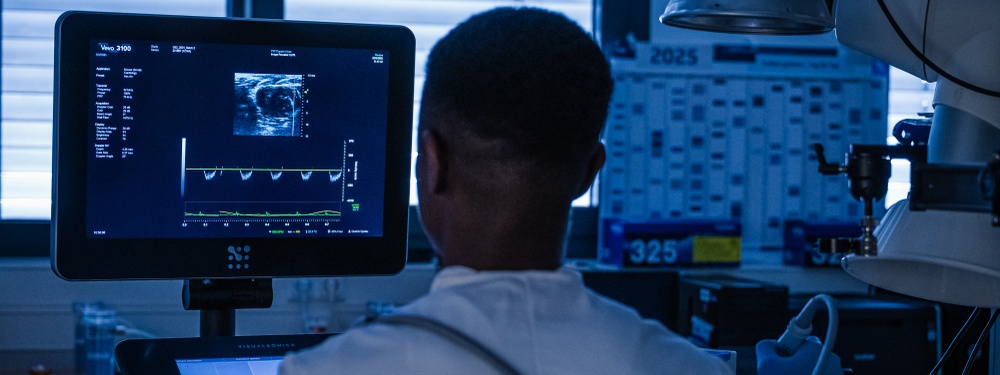
The Small Animal Imaging Platform at the Medical Faculty of Justus-Liebig-University Giessen is situated within the Institute for Lung Health. This facility is comprehensively equipped for the characterization and phenotyping of small animals, boasting state-of-the-art instrumentation such as ultrasonography, microCT, and Fluorescence Molecular Tomography (FMT). The platform employs advanced methodologies and follows established protocols to ensure precise and detailed imaging capabilities. Additionally, our platform supports studies to measure exercise capacity in small animals with indirect calorimetry and VO₂max measurements. It also includes noninvasive blood pressure measurement and invasive hemodynamic assessments, utilizing the gold standard pressure–volume loop technique for both the right and left ventricles.
The Small Animal Imaging Platform is open to collaborations with all groups of the JLU and external institutions. It is directed by Dr. Baktybek Kojonazarov. For detailed information you can contact the platform via email or phone.
Instrumentation/Software
- Ultrasonography system Vevo3100 (Visualsonics, Canada)
- Microscopic computed tomography (mCT, Quantum GX3, Revvity, USA)
- Fluorescence Molecular Tomography (FMT, VisEn, USA)
- OxiletPro (Panlab, Spain) – treadmill with indirect calorimetry
- CODA noninvasive BP system (Kent Scientific Corporation)
- AnalyzeDirect (MayoClinic, USA)
- VevoLab (Visualsonics, Canada)
Services
The Small Animal Imaging Platform offers highly comprehensive and standardized expertise in screening, phenotyping, and detailed characterization of animal models of various diseases. This encompasses established noninvasive imaging techniques as well as invasive methods. Preclinical imaging offers non-invasive 3D anatomical visualization both in vivo and ex vivo, presenting a significant advantage over 2D histology by allowing the complete sample to be visualized and quantified.
Key applications include, but are not limited to:
- Lung Diseases: Facilitating research on pulmonary hypertension, fibrosis and cancer. Measurement of lung volume, density, aeration, lung blood volume, vascularization.
- Cardiovascular Diseases: Heart volume, function (including speckle-tracking imaging), structure, myocardial blood volume/perfusion. Vessels volume, strain analysis.
- Bone: Studies on arthritis, aging, osteoporosis, and phenotyping for genetic disorders.
- Biomaterials: Particularly relevant for assessing implants like stents.
- Cancer: Enabling the evaluation of tumor burden and vasculature.
- Kidney Diseases: Applied in the study of conditions like infection.
- Diabetes/metabolic syndrome: Particularly relevant for adipose quantification.
- Liver Diseases: Useful in the examination of conditions such as fatty liver, fibrosis, and cancer.