
Environmental Sciences (M.Sc.)
Taught in German
Overview
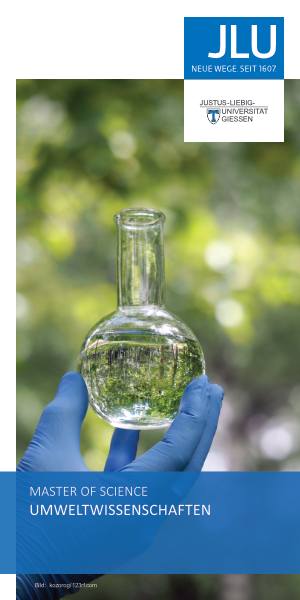
-
Picture: kozorog/123rf.com
- Overview
-
What impact do we humans have on the environment? What environmental problems arise from human use of natural resources? How can we preserve the biodiversity of ecosystems? What technologies and strategies can we use to reduce the negative environmental impact of agriculture? How is climate change affecting our natural resources? How can we protect and preserve them? The Master’s degree programme in Environmental Sciences addresses these key issues of our time.
Overview
Environmental sciences examine the consequences of human-induced land use and climate change. Soil, water, biodiversity – students acquire in-depth knowledge of ecological functions, nutrients and pollutants, as well as the use of natural resources. They explore potential solutions to the tensions between humankind and nature and develop science-based concepts for sustainable food production and resource use in the context of global change.
The aim is to measure and assess the impact of human activity on the environment and, where necessary, to develop alternatives. Our students study soil sciences, landscape ecology, waste management, microbiology, material flow management, hydrology, resource management, environmental analysis and geoinformatics.
The focus is on practice-oriented teaching. At the heart of the degree programme is the close link between teaching and research. Our hallmark is the active involvement of students in developing sustainable solutions at the interface between research and application. This gives students direct insight into current research projects. Let’s tackle the global challenges of the future together!
Teaching and research are carried out in the following areas:
- Soil science and soil conservation
- Landscape ecology and landscape planning
- Sustainable land use and global change
- Ecosystem processes
- Water and resource conservation
- Microbiology
- Circular economy and waste management
- Duration of studies 4 Semester 120 Credit Points (CP)
-
Duration of Studies
4 Semesters - 120 Credit Points (CP)
-
Accreditation
since 28 September 2007
Composition of the Study Programme
- Composition
-
Composition of the Study programme
The degree programme consists of 8 core modules (compulsory modules) and 8 specialisation modules (optional modules). Each module is worth 6 CP (4 hours per week) and concludes with an exam taken during the course. The marks achieved in the individual module examinations determine the final degree mark. In addition, the degree programme includes a Master’s thesis, which is equivalent to 4 modules. This demonstrates that you are capable of producing an academic paper independently.
The core modules (compulsory modules) are:
- Soil protection and contaminated site remediation
- Quantitative hydrology
- Environmental chemistry
- Applied statistics
- Ecology of agricultural landscapes
- Microbial ecology
- Soil inventory and site assessment for land use
- GIS project on landscape structure analysis
Individual profile
Developing an individual profile plays a major role in the degree programme. Our students decide for themselves whether they wish to acquire a broad, all-round knowledge or would prefer to specialise, and whether they would like their course to be more practice-oriented or academically and theoretically focused. The specialisation modules can be chosen from the full range of courses offered by Department 09 or even from other departments at JLU.
By selecting specific specialisation modules, students may acquire the following areas of specialisation, as indicated on the degree certificate:
- Landscape ecology and nature conservation
- Ecotoxicology
- Resource management
The specialisation modules required for each of these areas are listed in Appendix 4 of the Special Regulations.
Work Placement (optional) (6 or 12 CP)
The programme offers a voluntary work placement that enables our students to gain an initial insight into the various areas of professional activity in which they hope to pursue in the future. The work placement also enables them to collect hands-on professional experience and establish contacts with potential employers. The variety of contacts that our faculty possesses allows us to provide expert support to students seeking a work placement.
The work placement module replaces one (6 CP) or two (12 CP) profile modules.
Profile modules
Broad, all-round knowledge or specialisation – both are possible. It’s up to our students; they can tailor their course to suit their individual interests, drawing on the full range of options we offer. From a selection of over 120 modules, students can choose specialisation modules from the following topics, for example:
- Landscape planning
- Landscape, water and material cycles
- Resource management
- Soil resources and soil conservation
- Microbiology
- Bioinformatics
- Communication and consultancy
- Organic farming
- Renewable raw materials and bioresources
- Natural products research
- Crop production and plant breeding
- Politics
- Market economics
- Insect biotechnology
Modules from other research fields within the department may also be selected, e.g. Plant nutrition, business management, consumption, entomology, environmental genomics and animal welfare.
You can find the exact names and descriptions of the profile modules on the ‘Modules’ page.
-
Further Information
A description of the core- and specialisation modules can be found in the special regulations with module descriptions and module plans (in German)
More on this ("Spezielle Ordnung")
Courses offered in the course catalogue
- Electronical course catalogue (in German)
Application
- Commencement of Studies in the Winter and Summer Semester
-
Commencement of studies
Summer semester and winter semester
- A start of studies in the winter semester is recommended.!
- Application: Entrance Requirements
-
Entrance requirements
The Master's programme in Environmental Sciences is a consecutive programme. This means that you need a relevant Bachelor's degree to be admitted. For better classification, so-called relevant bachelor's degrees have been defined. Applications with other degrees are also welcome – in these cases, the examination board will assess on an individual basis during the application process whether the subject-specific requirements for admission have been met. Relevant Bachelor degree courses of a German university are:
- Agricultural Sciences
- Biogeosciences
- Geoecology
- Ecosystem Management
- Environmentalgeosciences
- Environmental Management
- Environmental Natural Sciences
- Environmental Sciences
Applicants who hold a Bachelor’s degree in Nutritional Sciences or Nutritional Sciences and Home Economics at the time of application must have passed six modules (or comparable modules) from the following list:
- Soil and Landscape Ecology
- Recycling and Waste Management
- Basics in Landscape Hydrology
- Agriculture and Environment
- Basics in Ecology and Soil Science
- Pollutants in the Environment
- Nature and Landscape Management
- Resource Utilisation, Environmental Protection and Policy
- Ecological Soil Functions
- Water Quality and Nutrient Fluxes
- Soilscapes of Middle Europe
- Agricultural Utilization of Waste
- Vegetation Ecology
- Business Environmental Management
- Nature Conservation Monitoring
Descriptions of these modules can be found in the catalogue of modules.
In the context of the application and admission process the Examination Board may recognise other final degrees as equivalent on a case-to-case basis.
English language skills are required
English language skills at level B2 are required, as most of the technical literature is available in English. Formal proof is not required.
- Application not limited
-
Application for admission and registration
- The intake capacity of this degree programme is not limited internally by the university.
- Applications must be received by the JLU Student Secretariat by 15th January for the summer semester and 15th July for the winter semester. More on this...
- Special regulations apply to foreign applicants or those who gained their university-entrance qualifications abroad. Read more...
Career Options
- Career Options
-
Career options
As a graduate of environmental sciences, employment in a whole range of fields is possible. For example activities in the chemical and waste management industries can be considered. Environmental scientists are also in demand in the building materials and paper industries.
Their technical expertise is also in high demand in authorities and ministries in relevant specialist presentations.
If you are considering a doctorate, the research and science sector also offers you a career opportunity.Doctoral Studies at JLU
Doctorate possible with a Master's degree for the degree Dr. rer. nat.
Graduate Centres
International Giessen Graduate Centre for the Life Sciences
International
- Incomings
-
Information about studying at Justus Liebig University Giessen (incomings)
-
- International Office
General counseling of international students
Dr. Saltanat Rakhimzhanova, Patrycja Zakrzewska
Goethestr. 58, Room 38
35390 Gießen
Contact and office hours
- International Office
-
Further Information
- Further Information: Documents
-
-
Examination- and study regulations
- Special regulations (in German)
(Please note that only the German version of the modules is offical and legally binding. The english Version is for informative purposes only.) - General study regulations for modular and multi-stage study programmes
Courses offered in the course catalogue
- Electronical course catalogue (in German)
- Special regulations (in German)
-
- Master's Degree Programmes of Faculty 09
-
taught in English
- Agrobioinformatics
- Agrobiotechnology
- Insect Biotechnology and Bioresources
- One Health (start in winter semester 2026/27)
- Sustainable Transition (digital degree programm)
- Transition Management
taught in German
- Agricultural and Resource Economics
- Beverage Technology (offered in cooperation with the Geisenheim University)
- Bioinformatics and Systems Biology
- Crop Science
- Environmental Sciences
- Food Economics
- Information Technology in Agricultural and Environmental Sciences (discontinued)
- Livestock Sciences
- Nutritional Sciences
- Nutritional Sciences and Home Economics / Ecotrophology
- Wine Economics (offered in cooperation with the Geisenheim University)
- Any Questions
-

Any Questions?
Information- and advisory services of JLU can be found under the category “contact” on this page!

Contact
-
Subject Advisor
- Subject Advisor
-
Prof. Dr. Dr.-Ing. Peter Kämpfer
Institut für angewandte Mikrobiologie
IFZ - Heinrich-Buff-Ring 26-32
35392 Giessen
Phone: 0641 - 99 37352
Office hours: by appointment
Peter.Kaempfer@umwelt.uni-giessen.de
Team for Studies and Doctorates of Faculty 09
studies
-
Links
-
Central Study Advisor
- Central Student Services
-
- Students office →
(for formal matters like matriculation) - Central student advisory office
(advice for students & prospective students) - Hotline Call Justus
(first contact for all matters pertaining to studies) - International office →
(for international students)
- Students office →