SDGnexus Network
SDGnexus Network
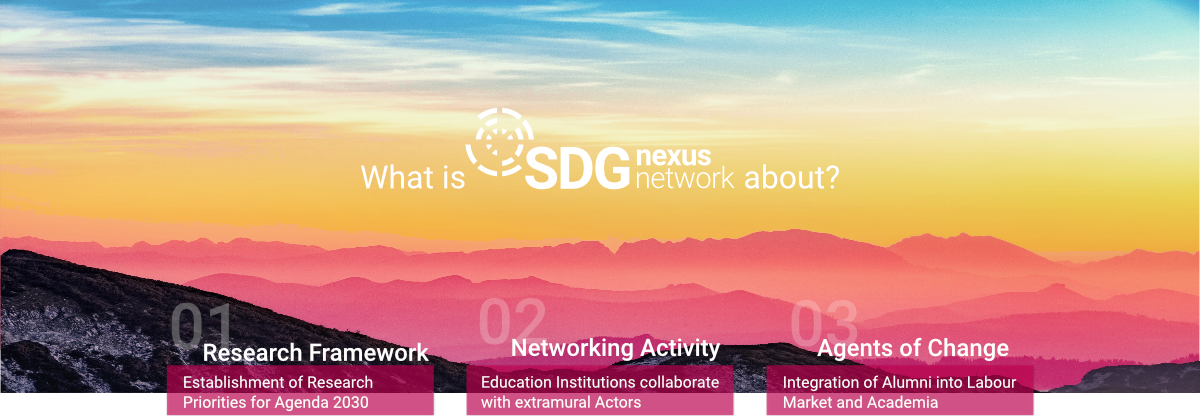
The SDGnexus Network connects global research on the SDGs
- The network in brief
-
The SDGnexus Network is a global community of universities, research centers, and stakeholders committed to promoting the Agenda 2030 for sustainable development. The SDGnexus Network is a part of the DAAD “Higher Education Excellence in Development Cooperation – exceed” program and, as such, it aims to strengthen higher education for enabling effective and innovative contributions to the Sustainable Development Goals (SDGs) of the United Nations.
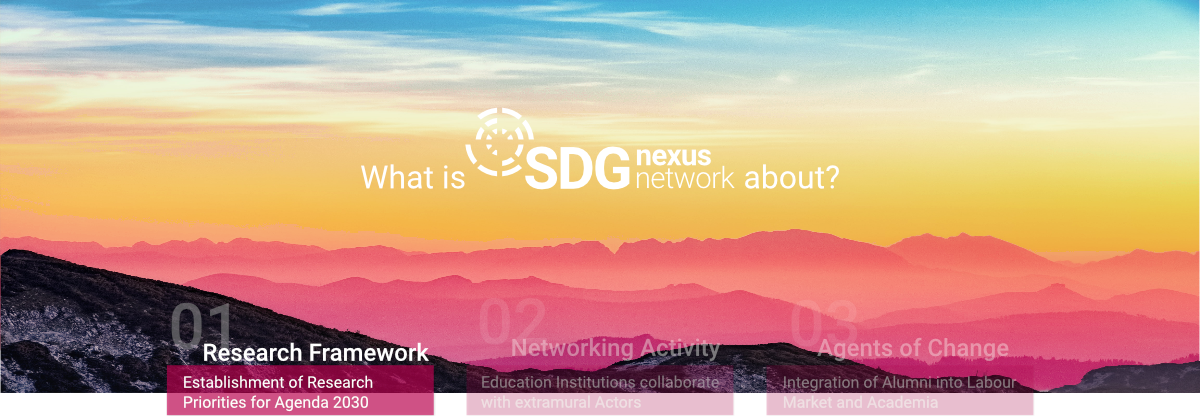
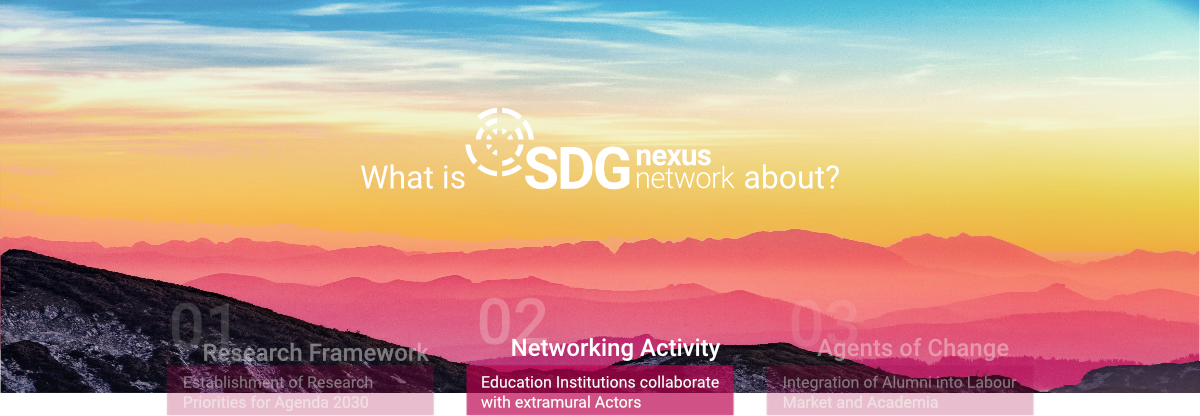
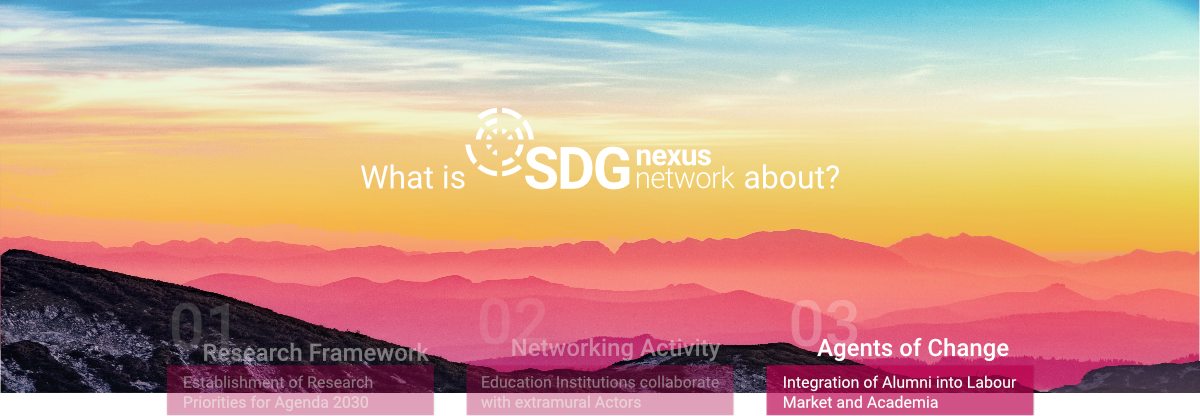
The SDGnexus Network has three main objectives:
- Establish common research framework through joint research projects between our network partners.
- Qualify the next generation of scientists as agents of change.
- Promote exchange and collaboration between our network of higher education institutions and extramural actors.
- Contact
-
SDGnexus Network
Senckenbergstrasse 3
D-35390 Giessen
Phone: +49 641 99 12705
Fax: +49 641 99 12709
E-Mail





Research
Research
 |
 |
| The SDGnexus Network promotes the Nexus approach for the establishment of its research framework. The Nexus approach goes beyond the investigation of single SDGs and allows for flexibility in identifying vital context-specific interlinkages between SDGs. Considering the main development challenges of our partner countries and the diverse potential of our partner institutions, we have identified five Nexus areas that will serve as a stepping stone for further research on different SDGs and their interlinkages. | The SDGnexus Network Research Publications disseminates multidisciplinary research promoting the Agenda 2030 for sustainable development. Our publications encompass a range of formats, including peer-reviewed Research Papers, Books and Book Chapters, Working Papers, and Other Publications. Spanning diverse nexus areas, these research contributions collectively drive the progress of context-specific interlinkages between SDGs. |
|
Crop production and livestock husbandry are globally of tremendous importance for food security and nutrition, rural employment, and income generation... |
Rigorously peer-reviewed studies delve into the intersections of various disciplines to provide insights into sustainable development issues. |
|
Water is a vital resource for all forms of life on earth, and the use of this resource creates several synergies and trade-offs between a variety of SDGs... |
In-depth publications that offer extended explorations of critical topics, presenting holistic perspectives and analyses within the framework of sustainable development. |
|
Timely works that capture ongoing discussions, preliminary findings, and evolving ideas, fostering open dialogue and encouraging collaboration among researchers and practitioners. |
|
|
Diverse content forms such as policy briefs, commentaries, and letters provide informative overviews, aiding in the dissemination of crucial knowledge to a wide audience interested in sustainable development. |
|


Are you interested in publishing your work in the SDGnexus Network Working Paper Series?
Please contact our Technical Editor Dr. Christoph Funk (Christoph.Funk@wirtschaft.uni-giessen.de)

Research
 |
|---|
| The SDGnexus Network promotes the Nexus approach for the establishment of its research framework. The Nexus approach goes beyond the investigation of single SDGs and allows for flexibility in identifying vital context-specific interlinkages between SDGs. Considering the main development challenges of our partner countries and the diverse potential of our partner institutions, we have identified five Nexus areas that will serve as a steppingstone for further research on different SDGs and their interlinkages. |



Peer-reviewed Publications
|
|
|
|---|---|
|
The research papers of the SDGnexus Network encompass a wide array of multidisciplinary studies that align with the Agenda 2030 for sustainable development. These papers are published across various nexus areas, collectively contributing to the advancement of sustainability science. |


Otrachshenko, V., Popova, O., & Tavares, J. (2020). Extreme temperature and extreme violence: evidence from Russia. Economic Inquiry, 59(1), 243-262.
Books and Book Chapters
|
|
|
|---|---|
|
The books and book chapters of the SDGnexus Network encompass a wide array of multidisciplinary studies that align with the Agenda 2030 for sustainable development. These books and book chapters are published across various nexus areas, collectively contributing to the advancement of sustainability science. |

Working Papers
|
|
|
|---|---|
|
The discussion and working papers of the SDGnexus Network encompass a wide array of multidisciplinary studies that align with the Agenda 2030 for sustainable development. These papers are published across various nexus areas, collectively contributing to the advancement of sustainability science. |

Other Publications
|
|
|
|---|---|
|
Other publications (commentary, letters, policy briefs) of the SDGnexus Network encompass a wide array of multidisciplinary studies that align with the Agenda 2030 for sustainable development. They are published across various nexus areas, collectively contributing to the advancement of sustainability science. |

Policy briefs
Thesis


People & Network
With a broad cross-section of partners, the network is ideally positioned to facilitate the core objectives: Research, Networking and the training of agents of change. Find out more about our partner institutions.









News & Events
01.06.2023 - Dr. Iskandar Abdullaev joins SDGnexus Network as a Guest Professor based at Justus Liebig University in Giessen, Germany

19.11.2024 – SDGnexus Network: Autumn Highlights
29.05.2026 - Call for Abstracts: Water Security & Climate Change Conference
WSCC
Water Security & Climate Change Conference 2025

The web presence of the WSCC has moved.
Please update your bookmark or follow this link to access the new location:
www.watersecurity.info
Themes 2024
-
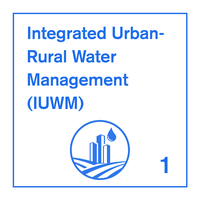
The traditional business-as-usual approach to urban water management has massively complicated and hindered urban development pathways with dynamically designed and adaptable infrastructure and technologies. A forward-looking IUWM approach means a paradigm shift from a traditional set of technologies to a synergistic (dynamic) relationship and solutions for urban agglomerations and the interplay with adjacent rural areas. The successful linkage between the urban system and the watershed requires social participation and integrated management to achieve optimal social, economic and environmental outcomes. This will ensure that the processes and outcomes meet the requirements of sustainability.
The integrated approach to urban-rural water management requires interdisciplinary approaches and the bringing together of components that affect urban water management, such as stormwater and flood protection, wastewater treatment, water supply and solid waste, and rural areas with watersheds, groundwater and agricultural activities. This interaction between urban and rural areas can be seen, for example, in the effects caused by the disproportionate growth of urban areas. For example, the availability and quality of water in the surrounding rural areas can be affected by excessive and uncontrolled water consumption and the discharge of untreated wastewater, which in turn affects the general quality and availability of water.
IUWM is a highly complex field with a multitude of boundary conditions, dynamic processes and optimization requirements, in which individual site conditions (political, administrative, social and technological) must also be taken into account. This is where the use of AI makes sense. The use of AI can close the gap of intelligent supporting infrastructure in integrated urban-rural water management projects and help to realize smart management and monitoring, e.g. with regard to autonomous operation, intelligent inspection, remote control
and emergency measures on site. Furthermore, AI can be used to optimize the determination of the Urban Water Security Index as a reliable decision-making criterion for planners in the field of urban water management.
The contributions and discussions related to integrated urban-rural water management will focus particularly on the
following aspects:
- Urban-rural continuum and urban spatial planning
- Urban-rural water security
- Big data and AI in urban-rural water management
-
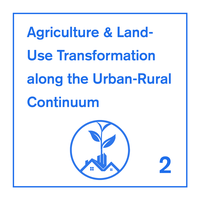
The predicted population growth in urban areas worldwide will lead to enormous challenges in the supply and distribution of water, food, and energy. For this reason, rural and urban areas must be interlinked, and strategies developed to ensure the efficient use and exchange of resources. Sustainable agricultural production and landscape management with innovative concepts for urban areas and transition zones are necessary to ensure livelihoods and environmental health along the urban-rural continuum. Land-use concepts should target increased urban primary productivity, shortening resource cycles, efficient water use and increased water quality as well as an improved urban climate in adaptation to increasing temperatures. In this thematic area the conference will particularly focus on how agricultural systems can be interfaced efficiently along the rural-urban continuum regarding resource availability, food production, social peace, health, ecological sustainability, urban climate management and related themes.
The contributions and discussions related to the agriculture topic area will focus particularly on the following
aspects of the rural-urban continuum:- Agricultural production systems in transition between rural and urban areas
- Innovation & resource use in urban agriculture
- Water pathways and food webs affecting markets, people, and livelihoods along the rural-urban continuum.
-
In a world facing an escalating crisis of water scarcity and the intensifying pressures of climate change, embracing data-driven decision-making has become paramount for optimizing the utilization of this vital resource - guaranteeing equitable access for all. Real-time information from sensor networks, satellites, and citizen initiatives provides valuable insight into the state of our water resources, both in terms of their quantity and quality. Using an open-science approach fosters transparency and collaboration between researchers, policymakers, practitioners, and communities, breaking down silos and promoting knowledge sharing. Besides, effective knowledge management is key. Data curation, analysis, and visualization transform complex information into actionable insights, empowering stakeholders to proactively navigate water challenges. Particularly universities and research institutions play a vital role as hubs for innovation, research, and capacity building, fostering the next generation of water data experts.
However, utilizing the power of data alone is not enough. While open science and knowledge management unlock the insights from diverse sources, we must go further and consider the broader connections within water resource management. This is where “nexus thinking” comes into play. Recognizing the interconnectedness of water with food, energy, and the environment, we can leverage data to develop integrated (e.g., nature based) solutions or implement hybrid approaches that combine cutting-edge technology with traditional methods. Through combined efforts and the implementation of data-driven approaches, we can achieve optimal water resource management, enhance resilience to challenges, and establish a sustainable future where all have access to this essential resource. Consequently, Theme 3 invites researchers, policymakers, and practitioners to share their insights on data-driven strategies, open science approaches, nexus thinking, and knowledge management.
The contributions and discussions related to information technologies and managing urban water data will focus
particularly on the following aspects:- Sensing Change: Open Data for Regional Water & Climate
- Transforming Data into Action: Knowledge Management for Water Security
- Connecting the Dots: From Data to Water-Energy-Food Solutions
Keynote Speakers

- Our keynote speakers, experts at the forefront of water security, climate change, and sustainable development, will share their perspectives on the complex interplay of these critical issues. Their presentations will stimulate thought-provoking discussions and encourage collaborations that can drive innovative solutions for a water- and food-secure future. Learn more about this year's keynote speakers or watch videos from last year's presenters below.
- Prof. Dr. Dieter Gerten
-
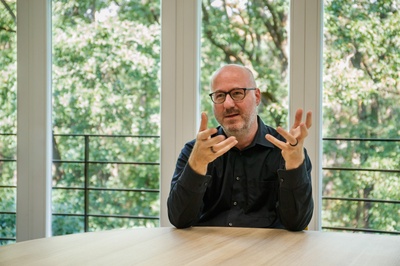
Image: © PIK/Klemens Karkow (2020) Dieter Gerten is geographer and hydrologist and works as research group leader of the group “Terrestrial Safe Operating Space” (TESS) at Potsdam Institute for Climate Impact Research (PIK). He is also Professor for Global Change Climatology and Hydrology at the Humboldt University Berlin.
His research focuses on global water resources, particularly on agricultural water scarcity as well as on the impacts of climate change and human activities on water cycles and ecosystems. His team primarily investigates interlinkages between planetary boundaries and the role of the freshwater cycle in the Earth system, based on a terrestrial biosphere model that simulates the key underlying processes and dynamics.
Throughout his career, Gerten has published >150 peer-reviewed papers and books and contributed to the 5th IPCC Assessment Report. In addition, he is in the Editorial Advisory Board of the Journal Detritus and served as Associate or Guest Editor of several journals, amongst others of Hydrological Sciences Journal, Earth Perspectives, and PNAS. Furthermore, since 2020 he is co-speaker of the Leibniz Research Network “Earth & Societies”, and member of the Advisory Board of the European Forum for the Study of Religion & Environment.

- Prof. Dr. Mariele Evers
-
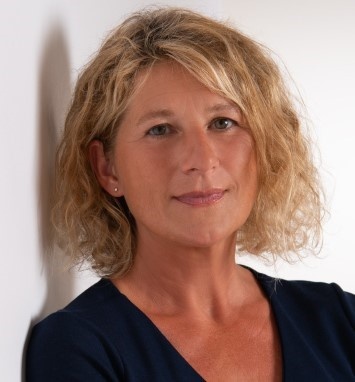
Image: © Mariele Evers, private Mariele Evers is Professor for Geography with a focus on Ecohydrology and Water Resources Management at the Rheinische Friedrich Wilhelms University Bonn, Germany. She also holds the UNESCO Chair on Human-Water-Systems since 2021. She studied Geography at the Universities of Münster, Bonn and Montpellier and obtained her doctoral degree at Hannover University in 2008 and was guest professor in Sweden and Thailand.
Evers research concentrates on water resources management and ecohydrology in general and focuses particularly on hydrological extremes (droughts and floods), disaster risk management as well as on climate, water and food systems’ interactions. In the context of the UNESCO Chair on Human-Water-Systems, Mariele Evers and her colleagues explore intersectoral integration approaches for river basin management and study collaborative, informed decision-making processes. This also includes the development of web-based tools to foster participatory decision-making. Her research regions are mainly Germany, Europe, Southeast Asia, and Africa.
Moreover, Evers has published widely in numerous papers and is Specialty Chief Editor for water and human systems of the journal Frontiers in Water. She also serves as peer reviewer of various journals, amongst others of Hydrology and Earth System Sciences, Natural Hazards and Earth System Sciences, and Water Resources Management. In addition, she chaired the German Scientific Advisory Board for the water research programs of UNESCO and the World Meteorological Organization (WMO) for eight years and is member of the Scientific Advisory Board for Natural Climate Protection (WBNK) since 2023.

- Dr. Johannes Cullmann
-
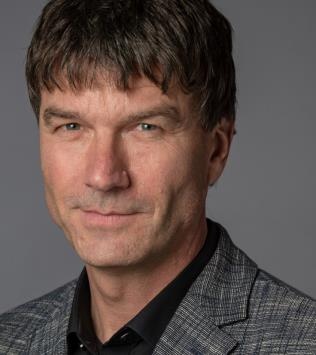
Image: © J. Cullmann / Rick Bajornas / United Nations Photo Johannes Cullmann is a German water scientist. He has worked for German universities and holds a PhD and a Habilitation in hydrology. His early career was focused on hydrological modelling and flood forecasting. Later he was responsible for international water cooperation for the German Federal Institute for Hydrology. He has supported various international commissions for transboundary water cooperation and presided UNESCO´s water program from 2012 to 2014. From 2015 to 2022, Johannes served as a senior director for water and climate in the World Meteorological Organization. He was the chief Scientist of the President of the UN General Assembly in 2022 and 2023. At present Johannes works for both the German Water Administration and the Institute for Water Education in Delft, the Netherlands.

- Dr. Elena López-Gunn
-

Image: © Ivan Boll Dr. Elena López-Gunn founded the research company ICATALIST, which is primarily focused on sustainability and climate change adaptation research. She currently works as director of ICATALIST and as Senior Research Fellow at the Royal Elcano Institute. She is a member of the European Scientific Advisory Board on Climate Change (ESABCC). She is an EU Climate Pact ambassador, and part of the UNESCO Task Force on a Science Based Water Assessment.
Elena participated in Spain’s latest national climate change impact assessment leading the chapter on water and is currently involved in the expert panel for the new Risk assessment for the future Spanish national Adaptation plan. She serves as expert member in the Citizen Climate Assembly in Spain and contributed to the 6th IPCC Assessment Report. She has a PhD from King's College, concluded her PhD in Geography at the King’s College, London, and was research fellow at the University of Leeds, the Botin Foundation Water Observatory and at the London School of Economics. She also has a Masters from the University of Cambridge and a Master in Investigative Journalism data and Visualization from Juan Carlos I University. Besides, she also worked as Associate Professor at IE Business school in Madrid (Spain).

- Keynotes 2023
-
Keynotes 2023
Get a sneak peek into the thought-provoking discussions and potential collaborations you can expect by watching these insightful talks from last year's conference.
- Wouter Buytaert
-
Co-producing climate adaptation strategies for mountain water security
Mountains are among the most at risk of global climate change. They combine highly complex and variable biogeochemical processes with vulnerable populations and development challenges. The high complexity of such systems is a challenge to the design and implementation of adaptation strategies. They need to be adapted to the local environment, but also with the socio-cultural setting and specific human and environmental needs. A co-production approach can help ensuring that the multi-faceted needs and preferences of vulnerable communities are accounted for. Using experiences of projects in South America, Africa, and South Asia, my talk elaborates the challenges and opportunities of co-producing adaptation strategies for water security, and highlights some success stories using novel approaches and technologies for data collection, analysis, and knowledge production.
- Jami Nelson-Nuñez
-
Confronting the Politics of Water Security
Increasing access to drinking water was one of the success stories of the Millennium Development Goals. Yet, eight years into the Sustainable Development Goals, there is reason to believe that we are increasingly off target. To address the challenge of water security, we need to contend with misconceptions about why people lack access to water and recognize the institutional roots of water inequities. Because institutions serve to create clarity and regulate behavior, they protect the status quo and become obstacles in responding to rapidly changing water landscapes. In this talk, I draw from what communities have taught me about institutional arrangements that can increase local water security as well as what lessons political science can offer regarding our shared challenge ahead to reshape institutions to address water security at national and global levels.
- Aluísio Granato de Andrade
-
Climate-Smart Agriculture in Brazil: Soil, Water&Resilience
Brazilian agriculture, a cornerstone of the national economy, faces significant challenges due to widespread land degradation and the escalating impacts of climate change. Erosion, extreme weather events, and shifting rainfall patterns threaten both crop yields and the quality of agricultural products. These environmental stresses have far-reaching consequences, affecting food security, ecological balance, and various economic sectors. To address these challenges, a multifaceted approach is required. Adaptation strategies, such as the implementation of integrated agricultural production systems, offer promising solutions for sustainable land management and increased resilience to climate change. These systems can enhance productivity without further deforestation, while also contributing to carbon sequestration and greenhouse gas emission reduction. By embracing innovative technologies and sustainable practices, Brazil can not only protect its agricultural sector but also contribute to global efforts to combat climate change.
Program
- WS1 | WATSAT: A Tool to Measure Water Security?
- WS2 | Urban Resilience through Mainstreaming Circularity in Wastewater Management
- WS3 | Mainstreaming Nature-based Solutions for Water Management (Theme 1)
- WS4 | Benefits and Challenges of Integrating Urban- and Agricultural Systems (Theme 2)
- WS5 | From Data to Decision - Information needs for Adaptation (Theme 3)
Abstract Submission
-
Abstract Submission Platform is CLOSED
Thank you for your contributions. We will contact all authors soon.All relevant information related to the abstract submission are summarized in the call for abstracts. Please note: The WSCC24 is planned as an in-person conference. An online participation for presenters is not foreseen. All presenters should be prepared to be at the conference in Gießen to present their content during the conference.
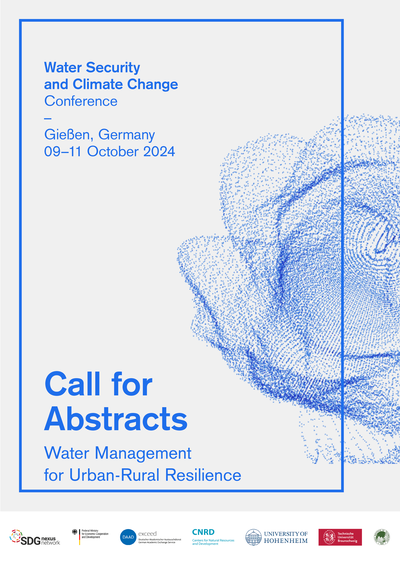
- Submission Instructions
-
- All abstracts must be submitted online between 01 May and 23 June 2024
- Abstracts can be submitted as ‘Oral or Poster Presentation’ or ‘Poster Presentation only’
- All abstracts must be submitted through the submission portal in text form
- The following information must be included in the submitted abstract: presentation title, all author(s)’ identifying information (including names, degrees, and institutional affiliations), WSCC topics (see list of topics in the submission portal), three to five keywords and narrative text (limited to 1800 characters)
- The conference organization committee may propose an alternative presentation format (open space sessions), based on the available times in the conference program
- Criteria for Abstract Selection
-
Abstracts will be selected by the WSCC scientific committee on the basis of the need to organize a well-balanced program and according to the following criteria:
- Relevance of the presentation for the conference themes
- Potential of the presentation to link science, practice, and decision-making
- Quality of abstract, in terms of content and language
- Originality and innovation
- The introduction text should not exceed 25% of the total abstract. The methods, results, and problem solving approach should denote 75% of the abstract.
- Limited Funding for Selected Presenters
-
Limited funding is available to support selected presenters in particular from DAC listed countries. The conference organizers will contact potential presenters eligible for funding after the submission deadline to determine the further proceeding. For selected presenters the WSCC24 may cover, depending on the necessity:
- International travel (round-trip ticket) from the nearest international airport in the country of departure to Frankfurt am Main (FRA).
- Airport transfer to/from the hotel in Gießen by public transport or shuttle.
- The registration fee for the conference.
- Four nights of accommodation (check-in 08th of October, check-out 12th of October) in a hotel selected by the conference organizing team including breakfast.
Please note that the WSCC2024 will NOT cover the following:
- Local transport from current place of residence to the nearest international airport in your country
- Airport taxes, if any
- Visa fee, if any
- Travel health insurance fees
- Daily allowance or boarding that exceeds the meals that are offered during the conference
Spouses/Partners are not supported, but they can attend the conference as participants when paying the conference fee. Travel arrangements for spouses/partners need to be arranged by the participant and will not be organized by the conference organizers.
Registration
Welcome to the WSCC2024
Ready to participate? Register now to secure your spot at the WSCC2024. To avoid overbooking, we kindly request that you only register if you are committed to attending the conference.
Registration
Please note that no general registration confirmation will be sent. We will contact regular participants and basic access participants on an individual basis. Presenters are automatically approved. You can register until 30 September 2024, 23:59 CET.
Conference Fees
| Regular Participants | 200€ | Full conference access including boarding, ice breaker event and tours. The registration fee can be paid by bank transfer prior to the event. |
| Presenters | 0€ | Same as Regular Participants, but the registration is free of charge (sponsored by the DAAD). Abstract ID mentioned in the letter of acceptance is required. |
| Basic Access | 0€ | Access to all sessions, no boarding or ice breaker participation, no tours, no welcome package. Registration is free of charge but tickets are limited. The conference organizing team will inform you shortly before the event about the acceptance in a separate e-mail. |


Water Security & Climate Change Conference 2024
- Contact - Organisation Team:
-
Dr. Björn Weeser
Katrin Strobehn
Iuliia Horn
wscc
Senckenbergstrasse 3
D-35390 Giessen
Phone: +49 641 99 12708
- About
- The Water Security and Climate Change Conference (WSCC) is an annual event where scientists, policy makers, and stakeholders from various sectors discuss the diverse facets of water security and its relationship to climate variability and climate change. The conference strives to go beyond science and build bridges between the state-of-the-art in multiple disciplines and different groups of stakeholders and practitioners. The WSCC aims to provide a platform for discussions on water and food secure societies, by creating a stimulating environment that produces innovative ideas and clear pathways towards their implementation. This successful conference has already taken place in Thailand, Germany, Kenya, Mexico, Vietnam, and Ecuador.
- Background
- The WSCC is an initiative of the ‘Higher Education Excellence in Development Cooperation – exceed’ program. It has been initially implemented under the auspices of the Sustainable Water Management in Developing Countries network (SWINDON) and the Centers for Natural Resources and Development (CNRD) in close cooperation with the Asian Institute of Technology (AIT). The scientific and organizational committee has been continuously expanded and today includes the Food Security Center (FSC) and the SDGnexus Network.
- Registration
- Ready to participate? Register now to secure your spot at the WSCC2024. To avoid overbooking, we kindly request that you only register if you are committed to attending the conference.
-
Registration Platform is CLOSED
You can register until 30 September 2024, 23:59 CET.
- Program and Conference Booklet
- Get a sneak peek into the inspiring discussions and potential collaborations you can expect at this year's conference by taking a look at the preliminary program and the conference booklet.
-
Conference Venue
Aula University Gießen, Ludwigstraße 23, 35390 Gießen
- Conference Themes
-
- Theme 1: Integrated Urban-Rural Water Management (IUWM)
- Theme 2: Agriculture and Resource-Use Transformation along the Urban-Rural Continuum
- Theme 3: From Data to Decision: Building a Sustainable Water Future
-
Insights from the WSCC23


Contact - Organisation Team:
Dr. Björn Weeser
Katrin Strobehn
Iuliia Horn
wscc
Senckenbergstrasse 3
D-35390 Giessen
Phone: +49 641 99 12708
Conference Booklet
The conference booklet serves as your essential resource for navigating the WSCC24, providing detailed information on the program, sessions, abstracts, poster session, keynotes, workshops, panels, and overall conference experience.


The network in brief
The SDGnexus Network is a global community of universities, research centers, and stakeholders committed to promoting the Agenda 2030 for sustainable development. The SDGnexus Network is a part of the DAAD “Higher Education Excellence in Development Cooperation – exceed” program and, as such, it aims to strengthen higher education for enabling effective and innovative contributions to the Sustainable Development Goals (SDGs) of the United Nations.
The SDGnexus Network has three main objectives:
- Establish common research framework through joint research projects between our network partners.
- Qualify the next generation of scientists as agents of change.
- Promote exchange and collaboration between our network of higher education institutions and extramural actors.
Contact
SDGnexus Network
Senckenbergstrasse 3
D-35390 Giessen
Phone: +49 641 99 12705
Fax: +49 641 99 12709
E-Mail
 |
 |
Imprint & Picture Credits
Contact
SDGnexus Network
Senckenbergstraße 3
35390 Gießen
Sources
| Section | Name/ Description | Credits |
|---|---|---|
| Landing Page | Graphic | Graphic by Maraike Büst | Picture by Simon Berger from Unsplash |
| Research | Research Area | Picture by engin akyurt from Unsplash |
| Working Paper Series | Picture by JJ Ying from Unsplash | |
| Nexus 1 | Picture by Helena Lopes by Pexels | |
| Nexus 2 | Picture by Mrjn Photography by Unsplash | |
| Nexus 3 | Picture by Pat Whelen by Unsplash | |
| Nexus 4 | Picture by Pexels from Pixabay | |
| Nexus 5 | Picture by Chris Liverani by Unsplash | |
| SDG Icons & Logo | https://sdgs.un.org/goals | |
| Education | Graphic Sustainable Transition Brochure | Graphic by Till Schürmann |
| Sustainable Transition Master Programme | Picture by Fauxels by Pexels | |
| PhD Scholarship Programme | ||
| SDG related MOOCS | Picture by Startup Stock Photos by Pexels | |
| People & Network | Graphic World | Graphic designed by Maraike Büst using Freepik from www.flaticon.com (licensed under CC BY 3.0) |
| Logos of Core Partners, Collaborating Partners, JLU and other exceed Centers | The rights of all logos used belong to the facilities, projects, institutes, centers and universities. |
|
| News & Events | News | Picture by Lora Ohanessian by Unsplash |
| Events | Picture by Ono Kosuki from Pexels | |
| General | Icons & Buttons | All Icons & Buttons are designed by Maraike Büst using Freepik from www.flaticon.com (licensed under CC BY 3.0) |











 (250 × 25 mm).png)

 (250 × 25 mm).png)